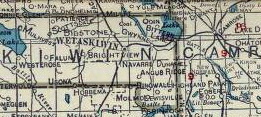
 A N G U S R I D G E
Settlement in Angus Ridge began prior to Alberta becoming a province. Early homesteaders arrived in the area as early as 1892, when the region was still part of the provisional districts of the Northwest Territories.
The community derived its name from early pioneer families, most notably Robert MacLachlan (R.M.) Angus and Florence Donaldson, who settled on a log house homestead in the area in 1892. The Post office opened on November 1, 1893. The first postmaster was Robert Angus, who held the position until 1898.
Early life at Angus Ridge was defined by clearing dense parkland timber, subsistence farming, and isolation. Families weathered severe hardships, including harsh winters, prairie isolation, and frontier illnesses (such as local diphtheria outbreaks that affected pioneer families in the early 1900s).
As the population grew with an influx of homesteaders through the late 1890s and early 1900s, community infrastructure began to take shape. A local school district was established to serve the children of the farming families. Schools in these rural districts often doubled as social hubs for the scattered population. The local branch of the Women’s Institute was active in documenting and shaping the social fabric of the region, later compiling local histories detailing life in Angus Ridge from 1917 onwards.
The community was built on mixed farming, grain production, and livestock. Over time, progressive farming techniques took hold in the region. Notable nearby agricultural benchmarks included pioneering operations like Greenridge Farm, which introduced early specialized livestock and progressive structural innovations to the broader Wetaskiwin rural area.
A significant milestone in the history of Angus Ridge—and rural Alberta at large—occurred mid-century with the advent of rural electrification. Farmers in the area formed cooperative Rural Electrification Associations (REAs) to bring electrical power to their homesteads. The Angus Ridge REA operated as an independent cooperative for decades, eventually amalgamating into larger regional cooperatives (such as the Battle River Power Coop) near the end of the 20th century as rural power grids modernized.
>
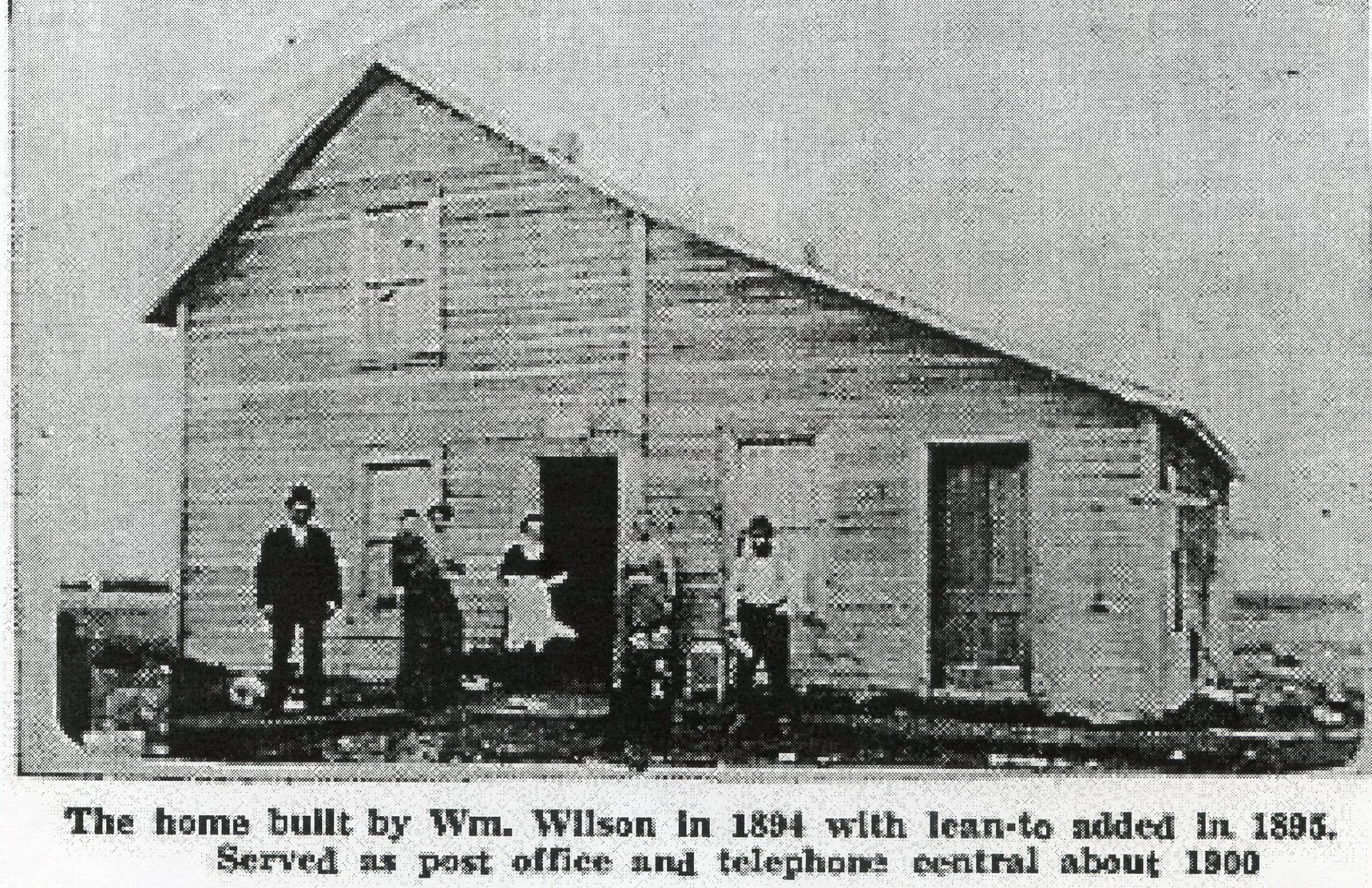
William Wilson was the the postmaster from 1903 until 1912.