 B A Y T R E E
According to community accounts, an early settler named Joshua McClellan discovered a distinct cluster of trees sitting near a shallow, bay-like depression in the local landscape. Early residents began referring to the location informally as "The Bay Tree" to describe the prominent stand of trees and the surrounding landform, a moniker that eventually stuck and became the official name for the locality.
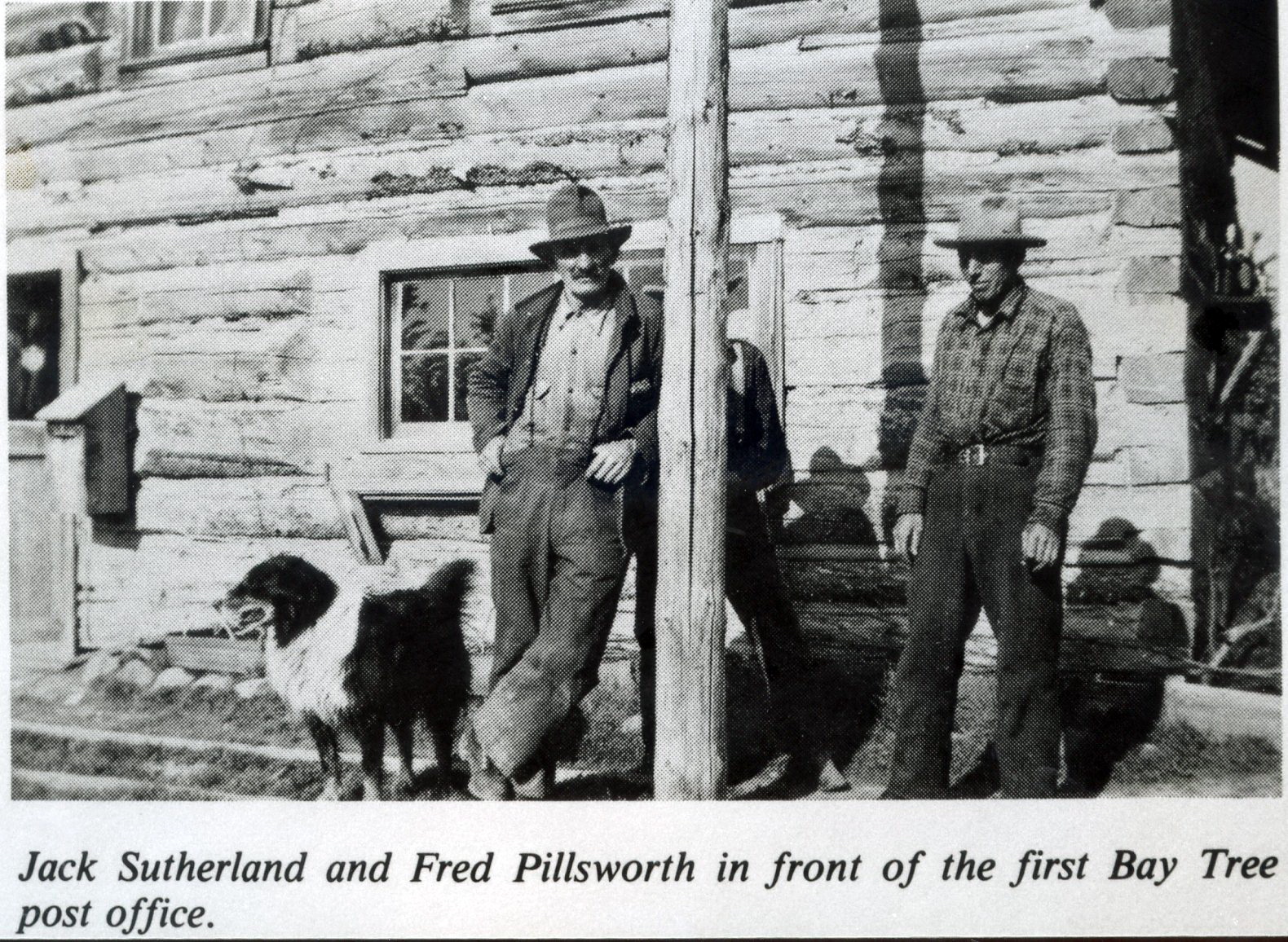
Settlers began moving into the Bay Tree area around 1914, heavily drawn by the promise of inexpensive homesteading land, which cost roughly $10 for a quarter-section. The Post Office opened June 1, 1930 The first postmaster was Rosario Tremblay, who held the position until 1934.
Following the First World War, a significant wave of settlers arrived as part of the Soldier Settlement Board scheme, which offered land to returning veterans. Pioneer life required immense resilience. Neighbors heavily relied on one another, banding together to build homes, clear land, and establish infrastructure.
As the population grew through subsequent waves of homesteaders, establishing community spaces became a priority. The first public building in the area was the Bay Tree School, erected in 1921 with Minnie McNaught serving as its first teacher for pioneer families like the Davies, Bourques, Bourdons, Smathers, and Ryans. Due to an influx of settlers by 1930, a new school was constructed, which was later replaced by an even larger school in 1937 to accommodate the growing number of children in the district.
Bay Tree developed a tight-knit community identity driven by active local organizations such as theFarm Women’s Union. In the early decades, much of the social and community organizing was spearheaded by the Farm Women’s Union (later known as the Women of Unifarm).