B E N T O N S T A T I O N
Though deeply rooted in the Canadian prairies, the name "Benton" traces its lineage south to the United States. It is named after Fort Benton, Montana, a major historical fur-trading and steamboat post on the Missouri River. Fort Benton itself was named in honor of Thomas Hart Benton (1782–1858), a prominent U.S. Senator from Missouri who was a fierce advocate for American western expansion. During the late 19th century, Fort Benton served as the northern terminus of the famous Whoop-Up Trail, a 210-mile-long trail stretching north into Southern Alberta used by traders, freighters, and eventually the North-West Mounted Police. When the railway community was established in Alberta decades later, the historic legacy of the Fort Benton trade route inspired its naming.
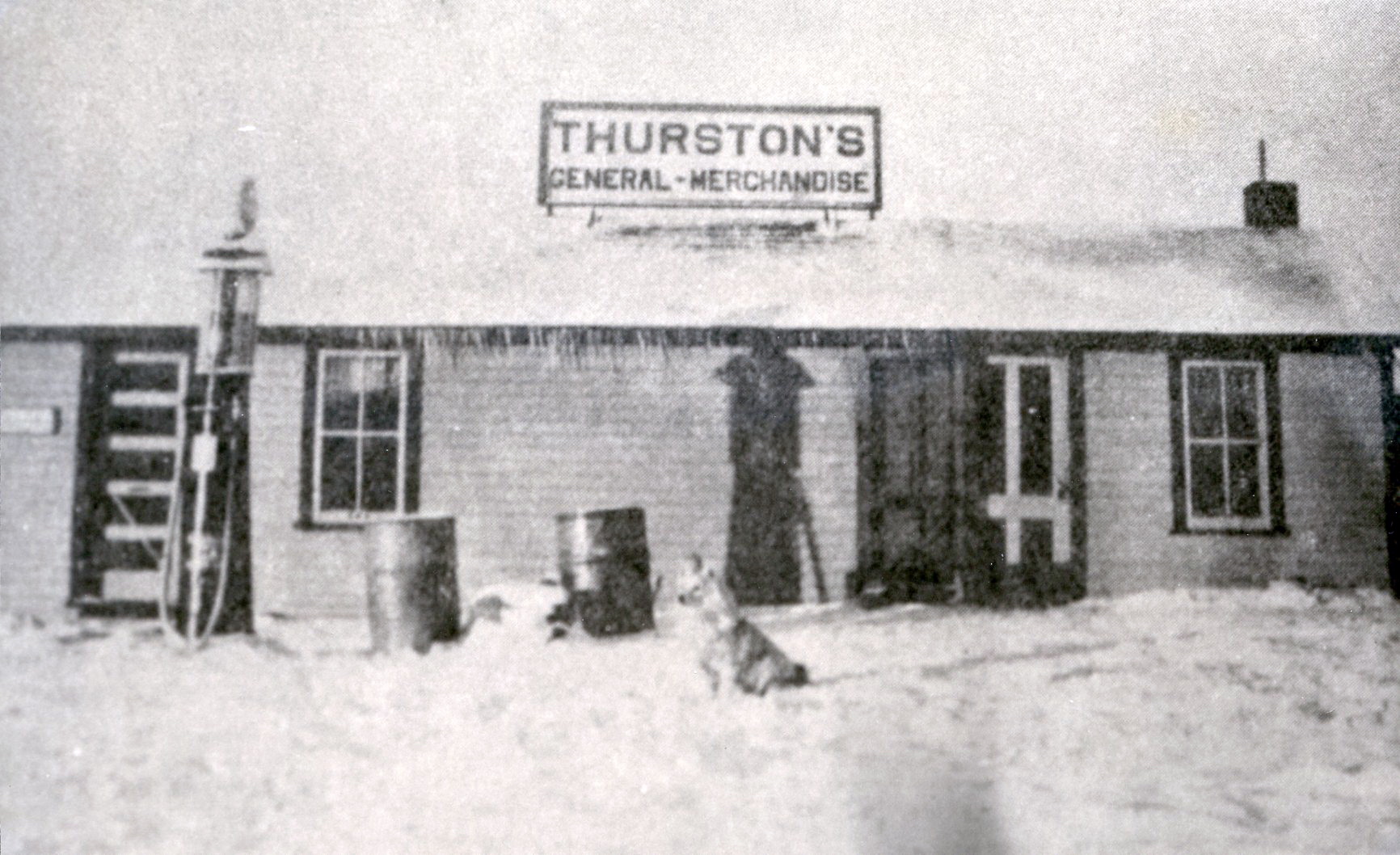
Benton Station came into being during the early 20th-century push to open the dryland plains of southeastern Alberta to homesteaders and grain farming. The arrival of the railway was the lifeblood of the community. A CNR station was established, giving the settlement its "Station" suffix. The rail line provided the critical link needed for homesteaders to ship their harvested wheat out to eastern markets and receive heavy machinery, lumber, and supplies. A local post office operated out of the settlement, serving as the social and communication nexus for the surrounding farming families scattered across the arid prairie. The Post Office opened April 1, 1912, and closed on August 31, 1968.
Like many small-scale agricultural hamlets across the Palliser Triangle—a notoriously dry region of the Canadian prairies—Benton Station faced severe environmental and economic challenges. The combination of the Great Depression of the 1930s and prolonged, severe droughts devastated dryland farming, forcing many early homesteaders to pack up and abandon their lands. As road networks improved and automobiles became common, farmers no longer relied on hyper-local railway stops for trade. Grain handling evolved, leading to larger centralized terminals in nearby towns like Oyen, rendering smaller stations obsolete.