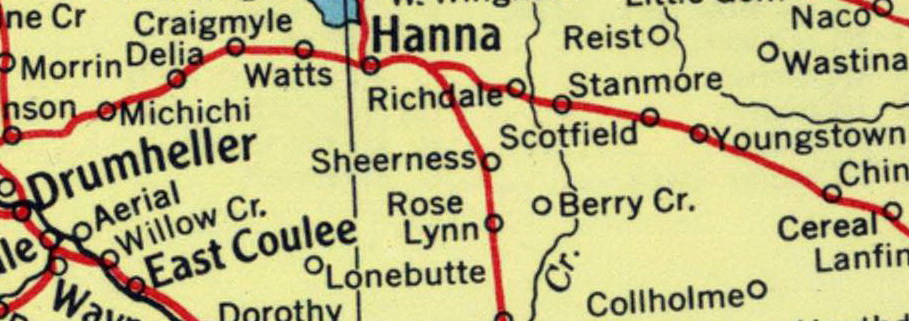
 B E R R Y C R E E K
Cattlemen moved into the Berry Creek region in the late 19th century. Huge cattle herds—some ranging from 3,000 to 12,000 head—grazed freely on the rich, native prairie grasses. Because the region was isolated and close to the border, it occasionally attracted outlaws and cattle rustlers coming up from the Missouri River coulees. To combat this, the North-West Mounted Police (NWMP) established a Berry Creek Detachment under Sergeant Munday to routinely patrol the region and protect local ranches. The historic Berry Creek NWMP outpost building has since been preserved and relocated to Calgary's Heritage Park.
Spurred by the Canadian government's drive to settle the West before American expansion, the Berry Creek district was officially opened for agricultural homesteading on January 1, 1909. The influx of homesteaders effectively fractured the open-range cattle industry. Fences went up, and native grasslands were plowed under for cereal grain farming. Driven by immigration, the broader region's population skyrocketed through the 1910s, peaking around 1921. Small municipal districts and school divisions were rapidly established to serve the new influx of families. The Post Office opened February 1, 1910, and closed on March 30, 1953.
The agricultural boom turned disastrous in the late 1920s and 1930s. Years of severe drought, combined with poor dryland farming practices (like deep-plowing fragile sandy soils), stripped the land bare. Grasshopper plagues compounded the misery, and average wheat yields plummeted from nearly 35 bushels per acre down to a near-zero 1.1 bushels by 1931.
Local farmers went broke, mortgage companies fled, and local municipal districts—including Berry Creek—accumulated unpayable tax arrears and bankrupted more than 36 local governments across the region. An immense human exodus followed as desperate families abandoned their homesteads.
In response to the crisis, the provincial government commissioned a study on the dry areas. The resulting evaluation—often referred to as the Berry Creek Report—laid bare the reality that the land was entirely unsuited for intensive grain farming. To rescue the bankrupt region, the Alberta government passed the Special Municipal Areas Act, declaring Berry Creek a "closed area" where no further crown lands could be alienated or bought outright. Settlers remaining in the region were given debt relief or assisted in relocating if they wished to leave. The government systematically transitioned the failed farm tracts back into large-scale community pastures and grazing leases to protect the soil and foster a sustainable cattle industry.
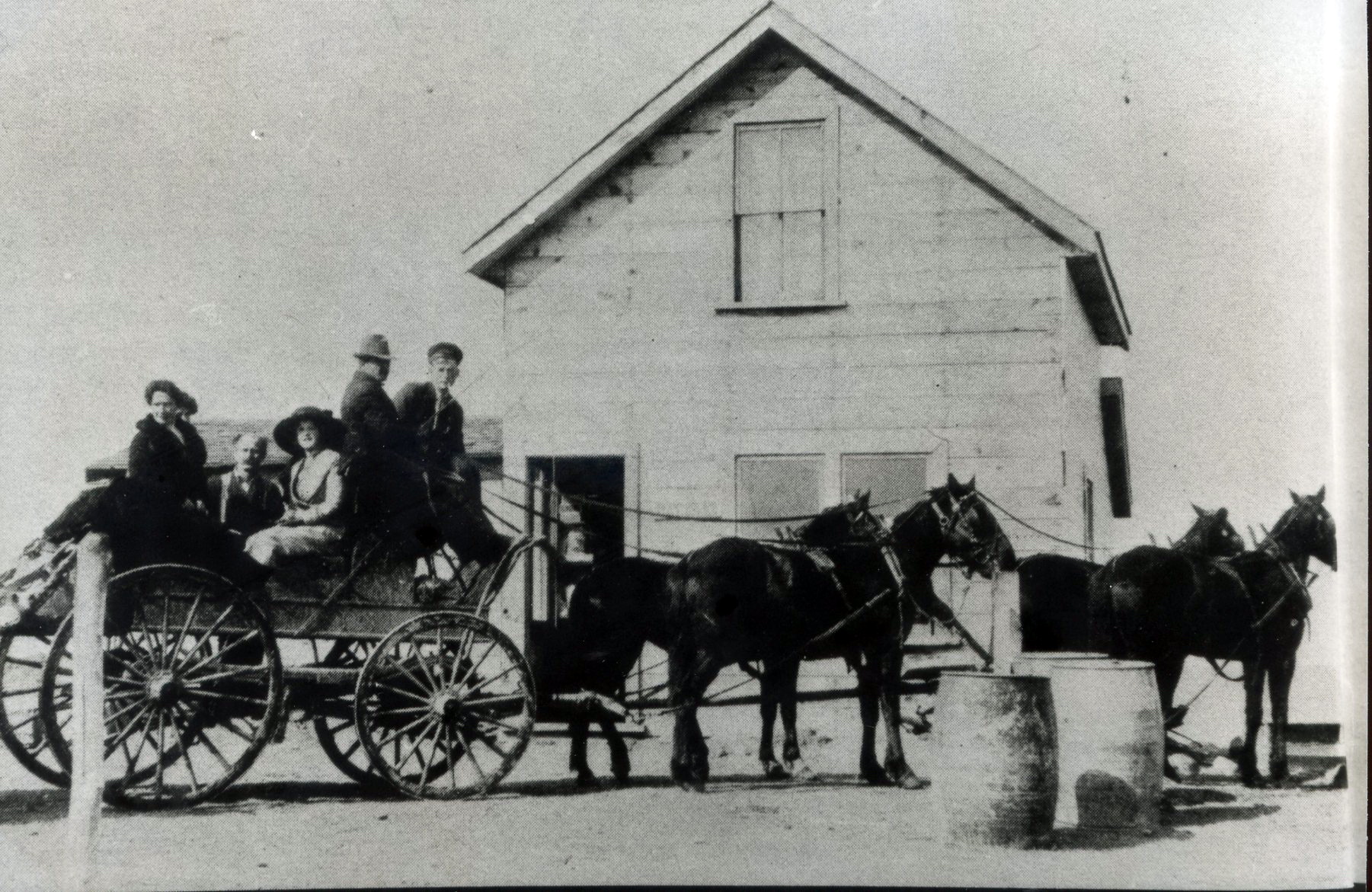
Post Office??