 B I N D L O S S
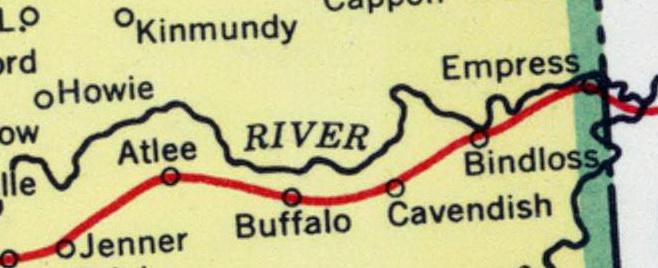
The community was established in 1914 when the Canadian Pacific Railway (CPR) pushed through the region. It was named in honor of Harold Edward Bindloss (1866–1945), a popular English novelist who wrote numerous adventure and western frontier stories heavily inspired by life in Western Canada.
During the homesteading era, Bindloss functioned as a local hub for farmers and ranchers arriving in southeastern Alberta. To support the growing population, Bindloss School District No. 3603 was established in 1919, serving local families for decades in a traditional multi-grade school setting. Over the years, the hamlet featured essential rural infrastructure, including general mercantile and hardware operations, post office contracts, and grain-handling capabilities. The Post Office opened March 15, 1916. The first postmaster was Jessie Falconer, who held the position for 3 months. She was replaced by Robert Hall, who held the position until 1936.
Like much of southeastern Alberta, Bindloss was devastated by the severe droughts and economic collapse of the Great Depression during the 1930s. Crops failed, and many homesteaders abandoned the land. To manage the massive tax-defaulted and depopulated lands, the Government of Alberta created the Special Areas Board in the 1930s. Bindloss remains under the administration of Special Area No. 2 to this day, which handles municipal services, public lands, and agricultural conservation.
As agriculture mechanized and farms consolidated, the population steadily dropped. By the 1991 federal census, Statistics Canada recorded a population of just 14 people, and very little of the original townsite remains standing today.

Post Office early 1990s