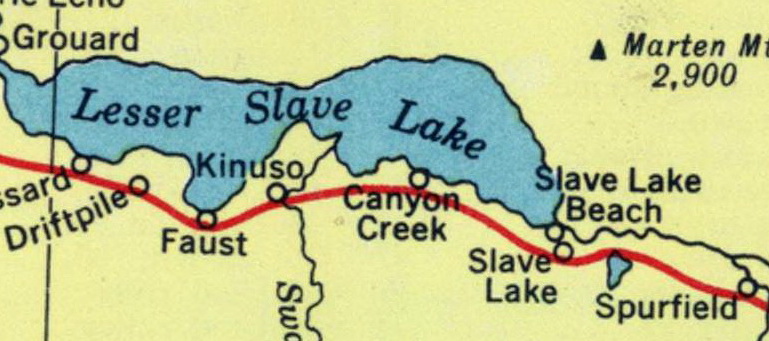
 C A N Y O N C R E E K
In 1799, explorer and mapmaker David Thompson arrived at the Lesser Slave River, opening the region to the North West Company and the Hudson's Bay Company for the lucrative fur trade. The broader region served as a crucial travel corridor connecting Edmonton to the Peace River country.
Prior to the arrival of the railway, travelers, fur traders, and gold prospectors heading north during the Klondike Gold Rush era utilized waterways and trails wrapping around Lesser Slave Lake. The completion of the Edmonton, Dunvegan and British Columbia Railway in 1914 fundamentally shifted settlement patterns. Iron rails bypassed older administrative centers like Grouard in favor of a southern route, sparking growth in nearby lakeside communities such as Slave Lake (originally Sawridge), Kinuso, Faust, and Canyon Creek.
With the railway providing a reliable way to ship goods southward, the logging and timber industry flourished around Lesser Slave Lake. Mills were established, and lake points like Canyon Creek functioned as localized hubs for harvesting and transporting timber resources.
The Post Office opened March 1, 1928. The first postmaster was Mary Potter, who held the position untl 1933.
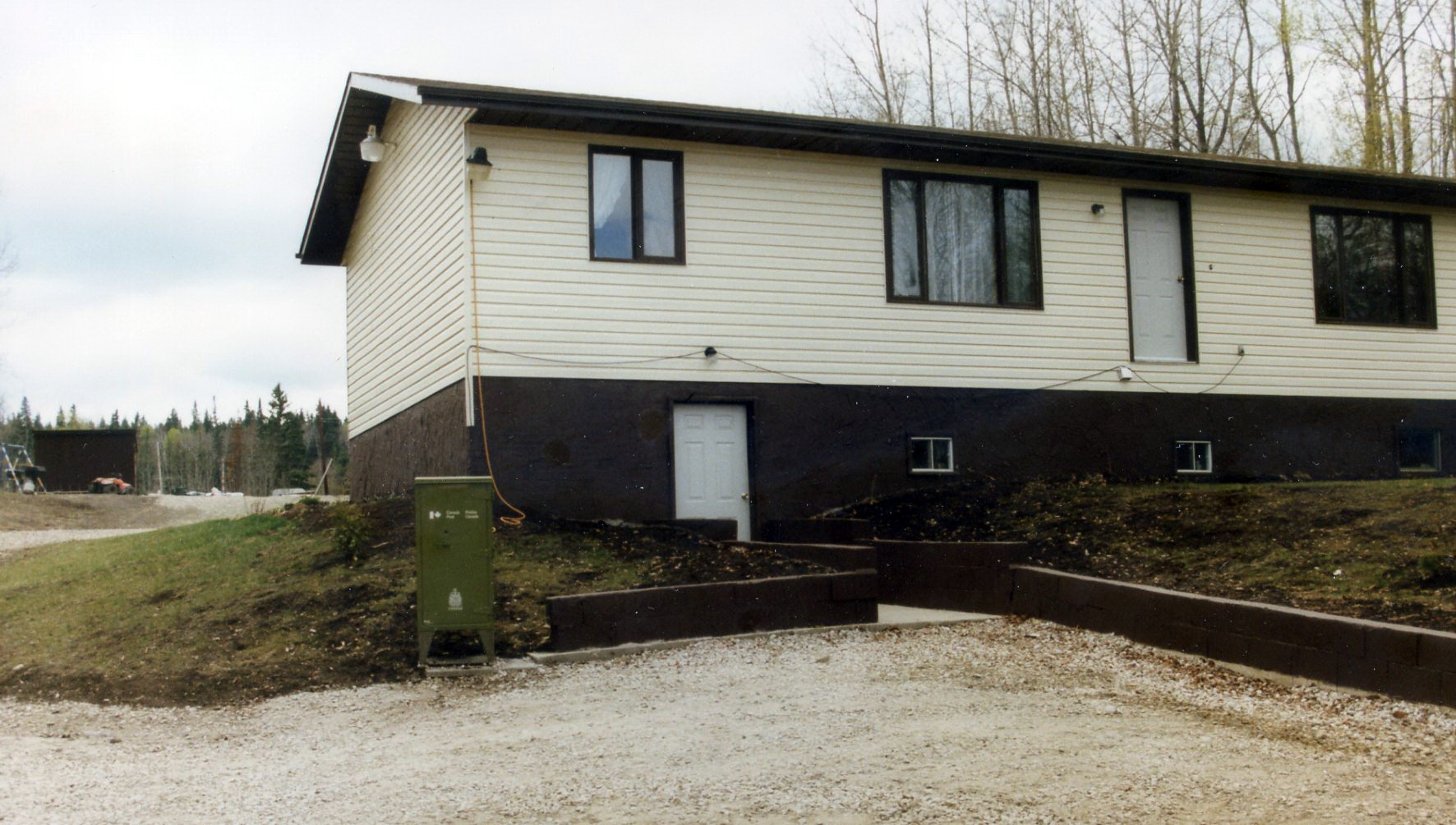
early 1990s post office ?