 C E S S F O R D
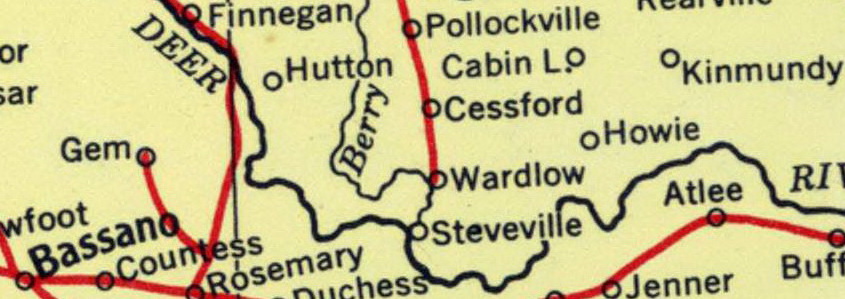
Settlement in the Cessford area began around 1910 as agricultural pioneers moved into the drylands of southern Alberta to claim homesteads. The community originally went by the name "Cess Fiord," which was chosen by early Swedish homesteaders in reference to their ancestral home. Later, after a local post office and store were established—and with the arrival of the railway line—the spelling and pronunciation were simplified to Cessford (though some historical geographic records also tie namesakes in the region to local farms or Scottish Border heritage). The Post Office opened August 10, 1910. The first postmaster was Mrs. M.E Anderson.
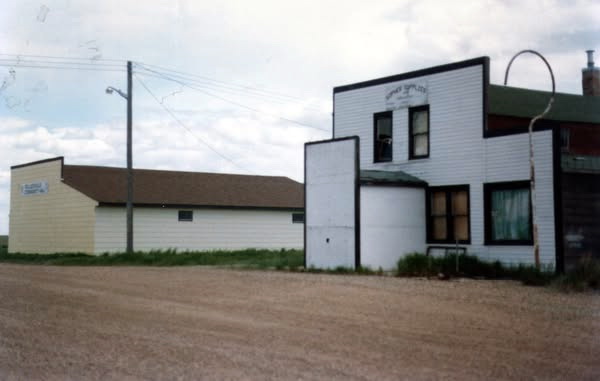
During the 1920s, Cessford blossomed into a thriving rural hub servicing the surrounding farming community. Despite its small size, it contained many of the amenities typical of a bustling prairie town: Two grain elevators and a livery barn Two machine shops, a garage, and a blacksmith shop A hotel, a barbershop, a Chinese restaurant, and a dance hall A police station and two schools. At its peak during this decade, the local population hovered around 100 residents.
The optimism of the 1920s came to a grinding halt with the convergence of the Great Depression and severe environmental disasters(The Dirty Thirties). The region was hit hard by severe droughts, devastating dust storms, and plagues of grasshoppers that stripped agricultural fields bare. Families were forced to abandon their farms and pack up. By the 1950s, the population had plummeted to roughly 25 people, and many of the commercial buildings were shuttered, moved, or abandoned.
 *
*