 C H E S T E R W O L D
While a few scouts and travelers moved through the region earlier, the true homestead rush into the Chesterwold district occurred between 1901 and 1902. Early settlers filed for land and rapidly transformed the parkland into a thriving agrarian community.
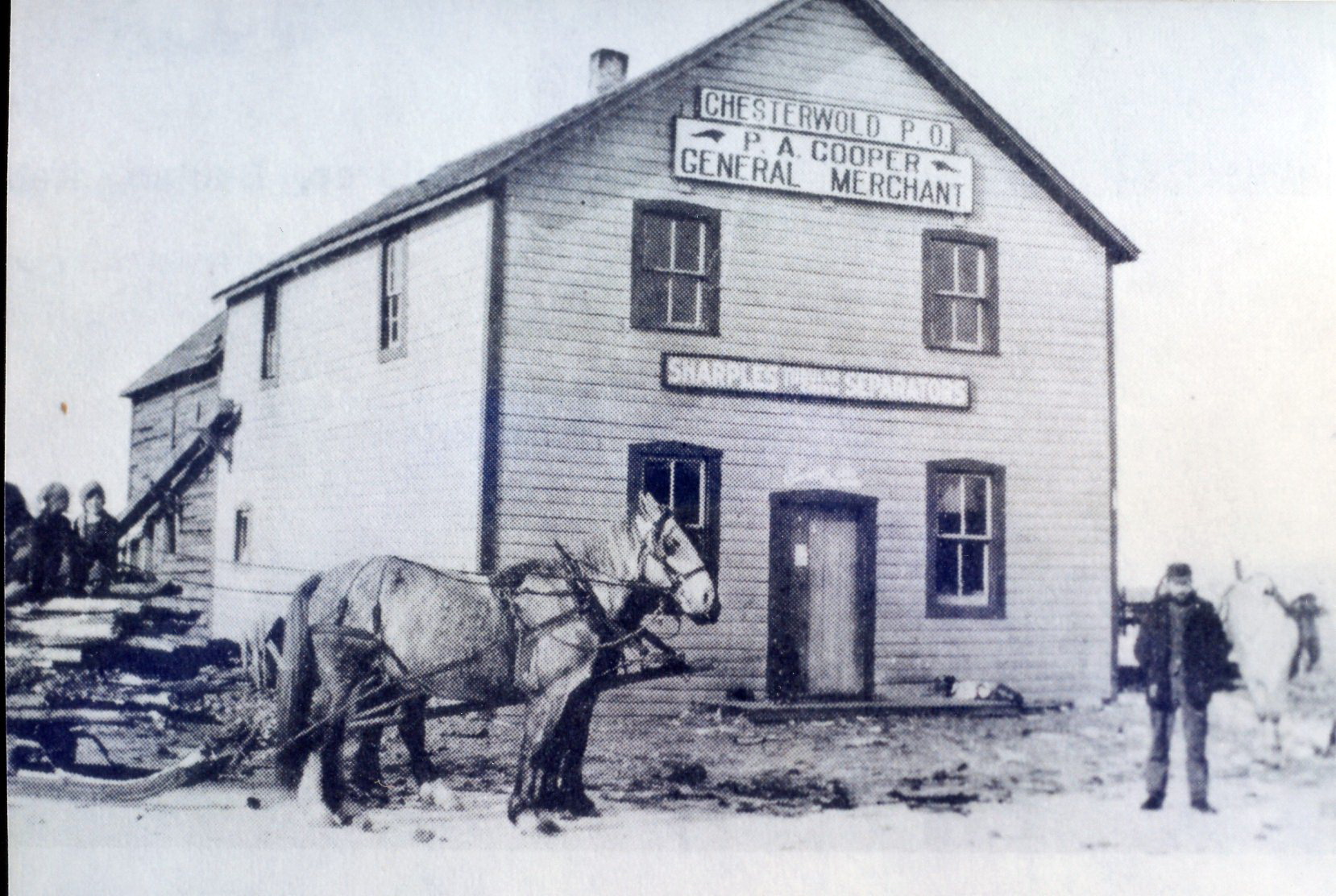
An early pioneer and settler named Pete Cooper arrived in the area in 1902 and officially named the local post office after his hometown of Chesterwold, Nebraska. The post office opened on November 1, 1903, with Cooper serving as its first postmaster. At its height, the core of the Chesterwold district featured a general store, the post office, a large barn capable of holding twenty-six teams of horses, and a massive community dance hall. As the population grew, the district eventually split into local school jurisdictions, including Pigeon Creek (established in 1905) and Half-Way Grove (established in 1918).
The district was widely famous across the region for its social life, most notably the annual Chesterwold/Ferrybank community picnic and stampede. Beginning earnestly around 1914 after a massive community work bee, locals cleared a half-mile race track, built a grandstand, a concession booth, and bucking chutes. The grounds hosted famous local horse races, relay races, early forms of Roman riding, baseball games, and a competitive ladies' basketball team, drawing crowds from all over central Alberta.
Like many early 20th-century prairie agricultural hubs, Chesterwold's localized infrastructure gradually centralized as transportation improved and automobiles made traveling to larger towns like Ponoka easier. The Chesterwold Post Office officially closed on July 9, 1934, and mail service shifted to rural delivery routes.