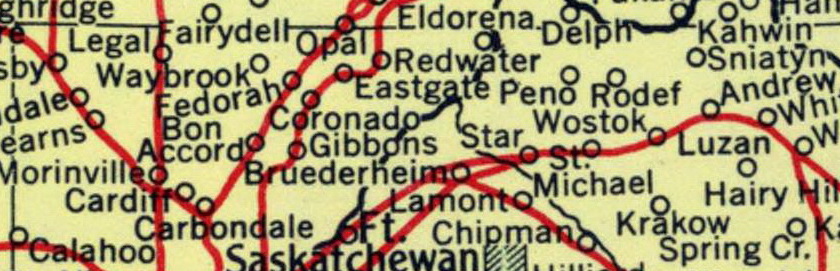
 C O R O N A D O
Settlement in the Coronado area picked up momentum around the turn of the 20th century as homesteaders and farmers moved into the fertile parkland regions north of Edmonton. Early community life was heavily centered around agriculture and neighborly cooperation. For instance, historical records from local institutions note that community worship services and social gatherings were initially held on Sunday afternoons in local pioneer homes before formal community spaces were built.
Unlike many local settlements named after British figures, Indigenous terms, or early pioneer families, Coronado takes its name far from home—specifically from Coronado, California. While the exact reason behind the choice is lost to everyday folklore, it was common practice during Western Canada's settlement era for new post offices, sidings, or communities to adopt striking names brought by settlers or chosen by railway/postal officials.
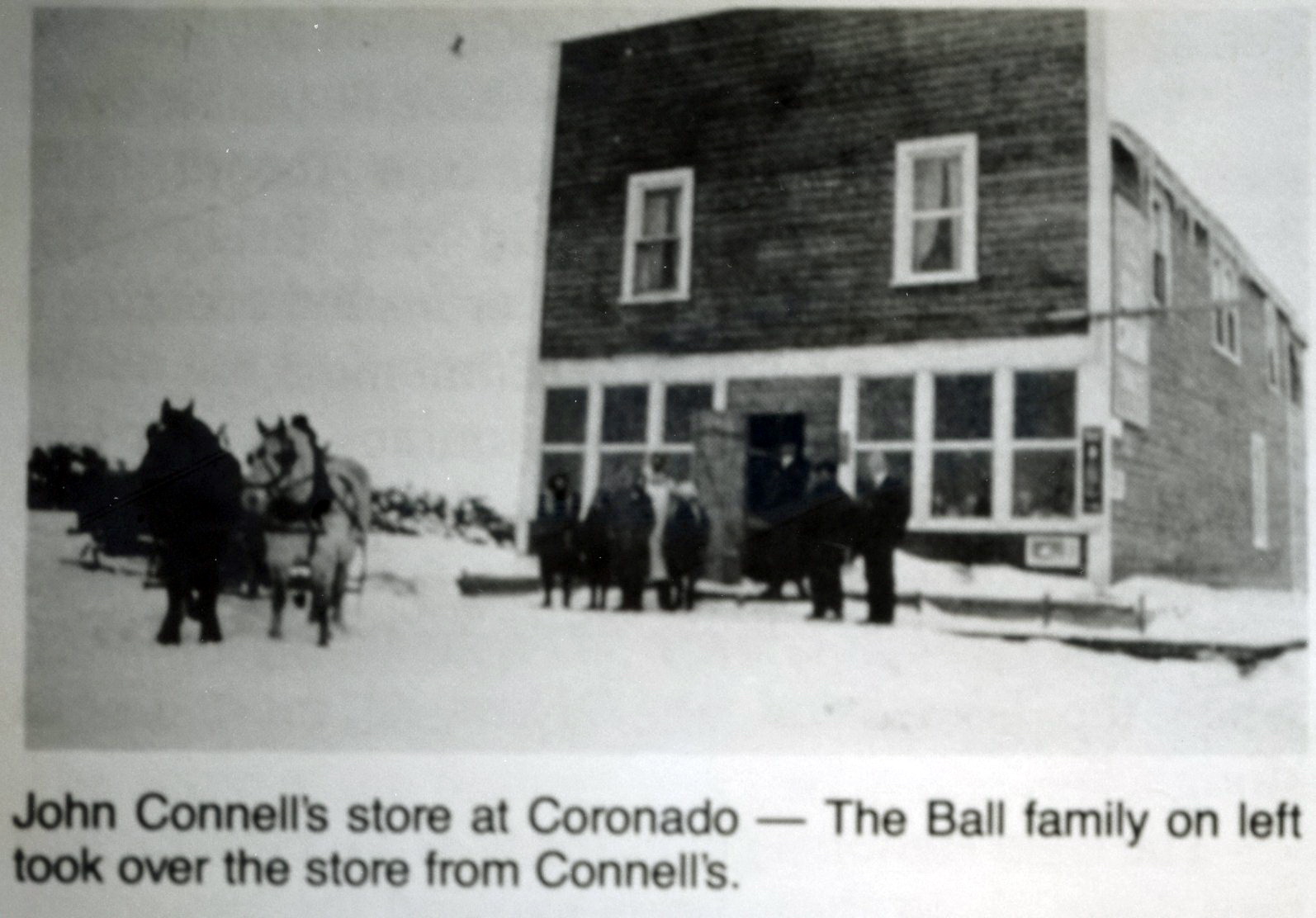
The Post Office opened Nov 1, 1921. The first postmaster was John Connell, who held the popsition until 1924. The area's development heavily mirrored the expansion of regional rail lines north of Edmonton. Historically, rail corridors like the Canadian National Railway's (CNR) Coronado Subdivision played an instrumental role in transporting local grain and livestock to markets, tying small farming localities like Coronado into the wider economic grid of the province.
 *
*