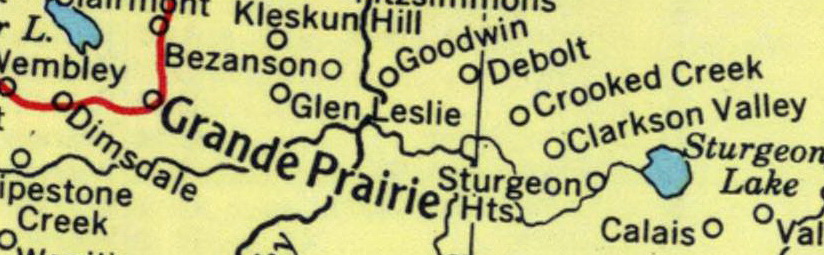
 C R O O K E D C R E E K
While parts of southern Alberta were settled earlier, the rush into the Peace River/Grande Prairie region accelerated significantly after the turn of the 20th century, particularly following World War I. Homesteaders were drawn to the area by fertile parkland soils. Clearing the dense brush and timber was backbreaking work. Early community life in Crooked Creek centered entirely around agriculture—primarily grain farming and livestock raising—alongside the establishment of local country schools and community halls. The Post Office opened Dec 1, 1930. The first postmaster was Peter Thiessen, who held the position until 1938.
A defining aspect of Crooked Creek’s historical and modern identity is its rich cultural diversity, particularly the presence of Mennonite and Hutterite communities. Generations of these traditional farming groups have shaped the local landscape, establishing cooperative agrarian practices, local specialized schools, and deep-rooted community values that helped stabilize the region through economic shifts.
Historically, travel through northern Alberta was plagued by mud and seasonal isolation. The paving and eventual upgrading of Highway 43 transformed Crooked Creek from an isolated outpost into a connected rural hub.
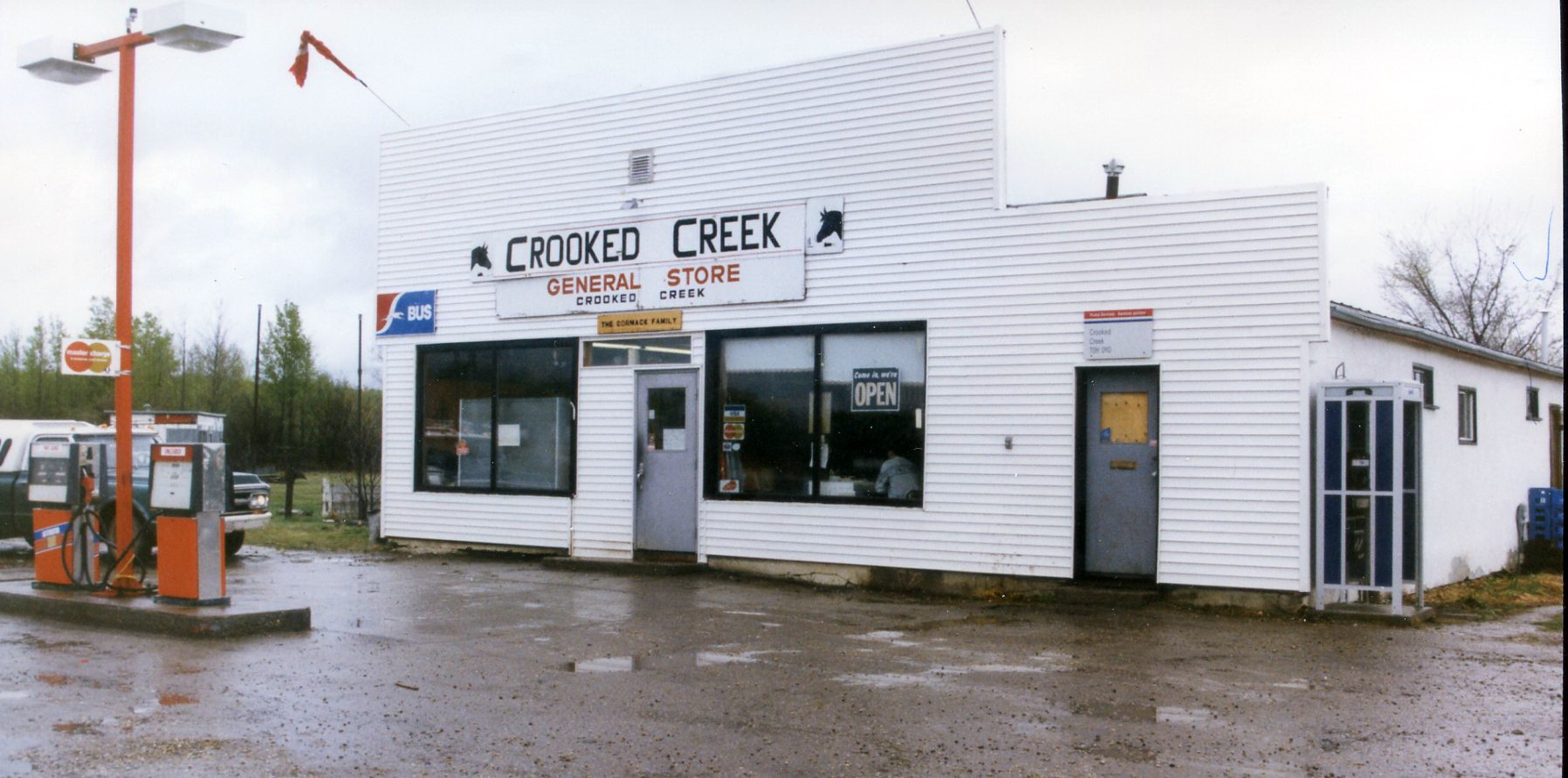
early 1990s