 D E L B O N I T A
While the hamlet itself sits up on a flat plateau, it overlooks the nearby scenic valley of the Milk River. In the early 1910s, a group of homesteaders gathered to petition for a formal post office. A local resident, Mrs. Emma Waters, suggested the name Del Bonita—derived from a Spanish phrase meaning literally "of the pretty", or interpreted locally as "beautiful valley."
Prior to formal agricultural settlement, the region was defined by the open-range cattle industry and proximity to the Montana border. Homesteaders began arriving in earnest during the early 1910s.
Before mail service was established, early settlers had to rely on favors from friends traveling from Magrath to the north, picking up mail left at private residences. On June 1, 1914, the official Del Bonita post office opened inside a local farmhouse, with William Newton serving as its first postmaster.
The high-country grasslands around Del Bonita have long been famous for their deep ranching roots. Large historical operations, such as the prominent McIntyre Ranch, heavily influenced the economic and social fabric of the western Canadian prairie foothills near the US border. In the mid-1920s, the legendary cowboy, rodeo champion, and "father of modern rodeo," Earl W. Bascom, worked in Del Bonita for the Orgill Ranch before trailing horses up to British Columbia.
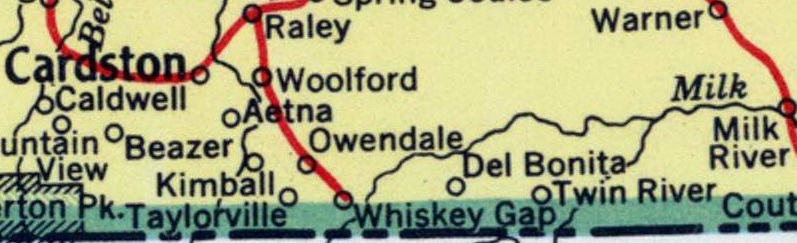
For decades, the nearby area featured fluid, informal north-south transit across the border, alongside notorious historical routes like Whiskey Gap to the west. In 1939, the official Del Bonita Border Crossing was formally established when Highway 62 on the Canadian side was completed to connect with Montana Secondary Highway 213, prompting the closure of the older, unofficial crossing at Whiskey Gap. It connects Del Bonita directly with Cut Bank, Montana.
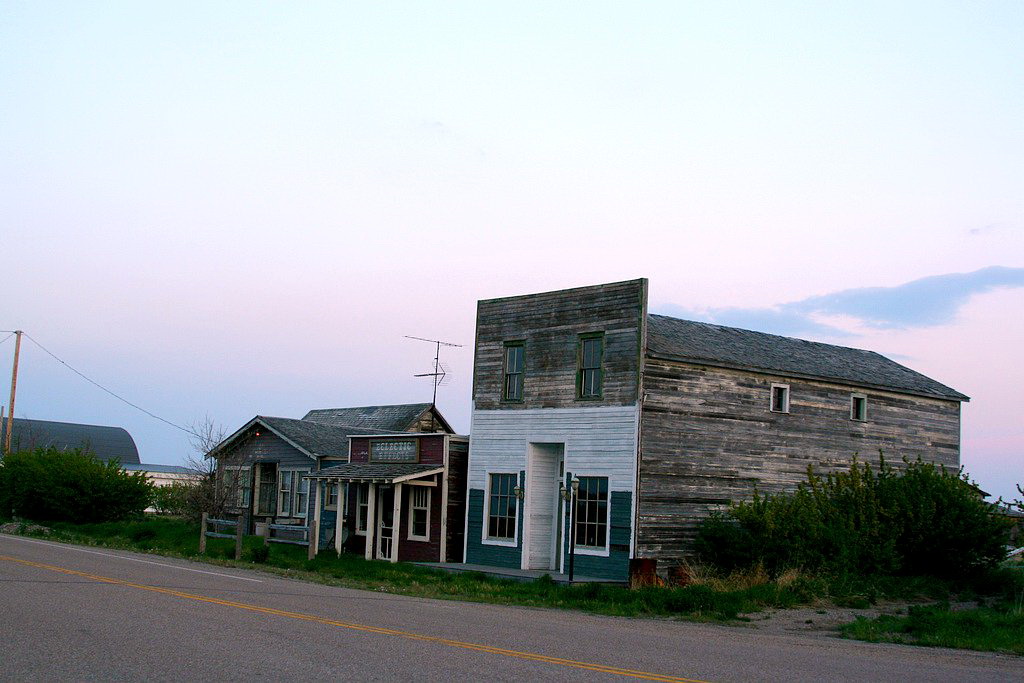
As neighboring communities and regional ghost towns (such as Whiskey Gap) faded, various historic buildings and structures—including oil sheds, pool halls, and older dwellings—were physically moved to Del Bonita to find a second life.
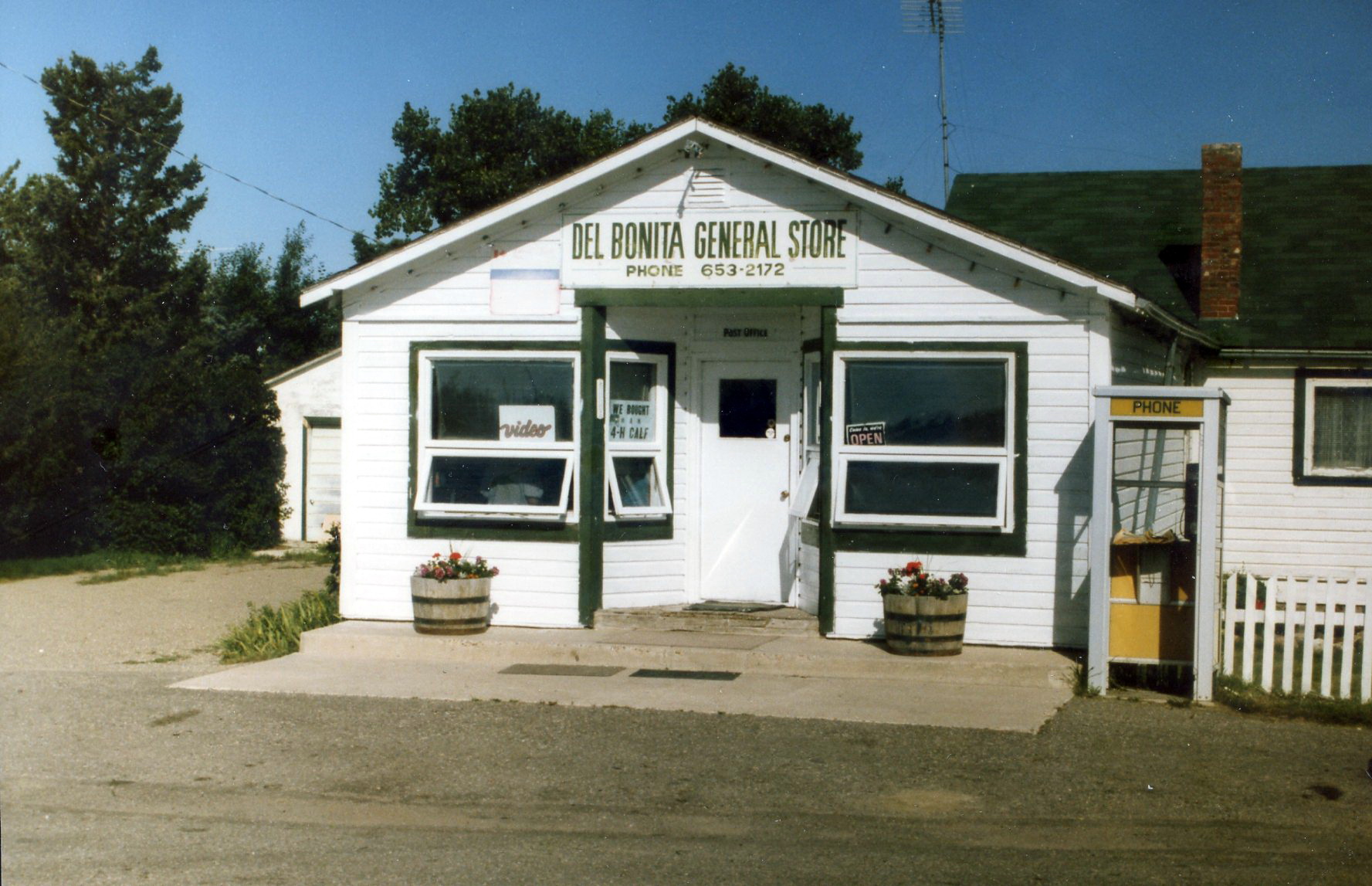
early 1990s