The community and its historical railway station were named in honor of Édouard-Gaston Deville, a prominent French-born Canadian surveyor who served as the Surveyor General of Canada starting in 1885 and pioneered photogrammetric mapping.
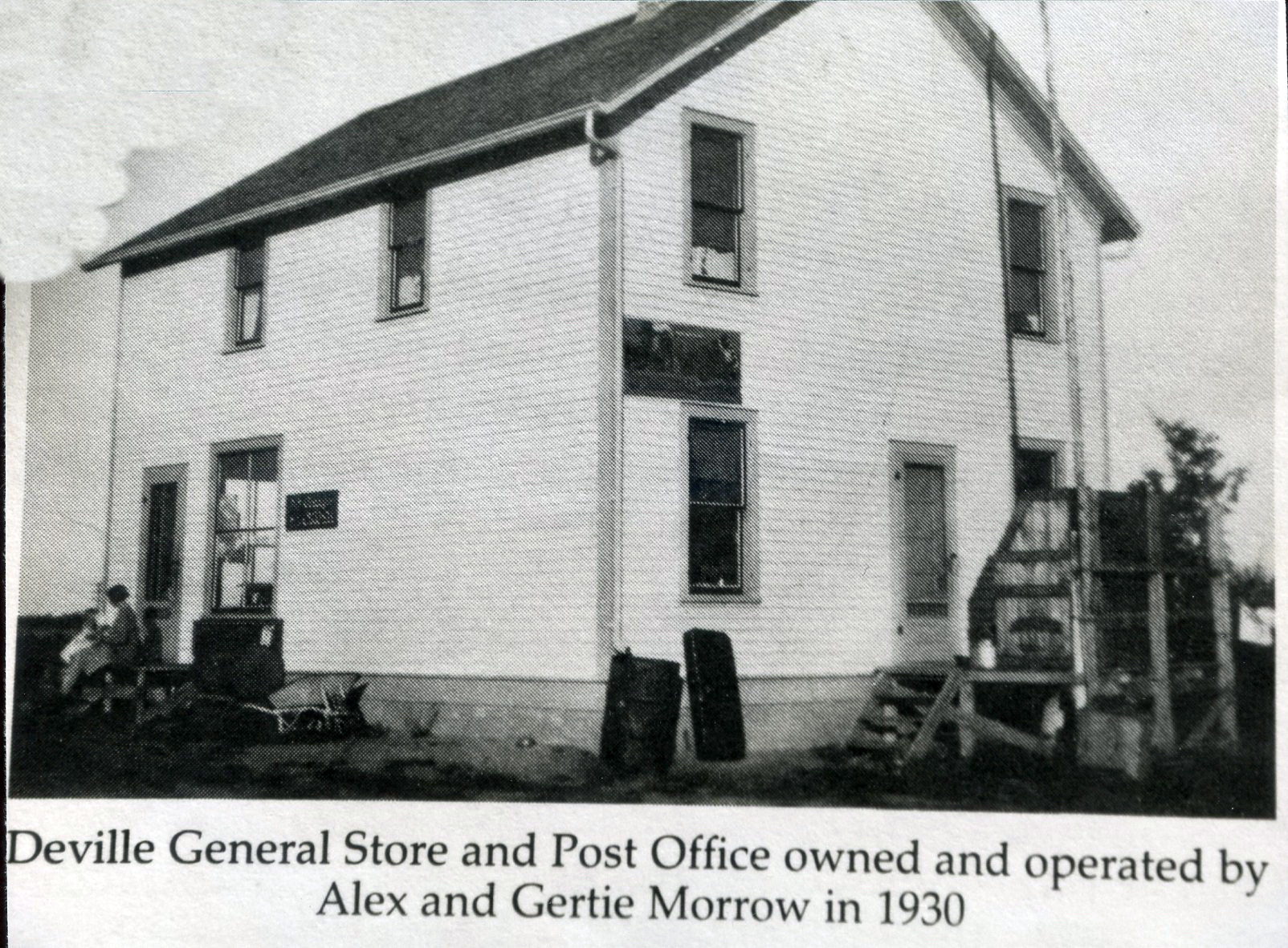
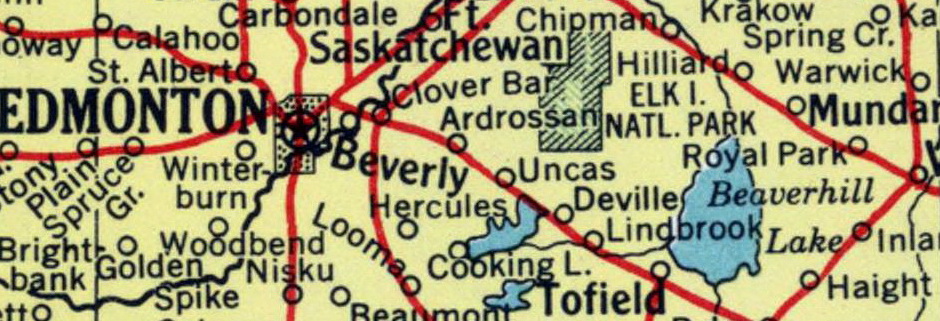
Deville’s establishment as a distinct locale accelerated with the construction of the Grand Trunk Pacific Railway line running out of Edmonton around 1909. Deville was designated as one of the official railway stations along this line (alongside neighboring hamlets like Uncas and Ardrossan), acting as a vital shipping point for regional grain and livestock. The Post Office opened on September 1, 1910.Following the turn of the 20th century, the broader region—rich in parkland, timber, and lakes—attracted a wave of homesteaders, including families of various European backgrounds and eastern Canadian migrants. Early economic activity revolved around mixed farming, logging, and clearing the heavily wooded knob-and-kettle terrain of the Beaver Hills.
One of Deville's most enduring historical landmarks is St. Margaret’s Church, a log-built structure established in 1915 by Archbishop Émile Legal. Serving early area settlers—including Irish squatters and homesteaders who filed claims around 1911—the church and its historic cemetery fell into disuse by the mid-1950s. However, local preservation efforts led by the Friends of Deville/St. Margaret’s Society successfully restored the building in the late 20th century, earning it a provincial Historic Resource designation.