D I C K S O N
The history of Dickson began in the fall of 1902, when a group of Danish-American men living around Blair and Omaha, Nebraska, sought new farming opportunities. Prompted by agents of the Canadian government who advertised the availability of fertile land in Western Canada, two scouts—Henry and Jim Larsen—travelled north to Alberta. Laced with rich parkland and promising soil, the area deeply impressed them. In March 1903, the first wave of pioneers—including Fred Pedersen, John Jensen, and Laus Christensen—left Nebraska, followed by a second group in June. On July 1, 1903, their train arrived in Calgary, and by mid-July, 17 Danish settlers had pitched tents on their respective homesteads. By mutual agreement, families with children settled close to one another to foster a support network.
Building a Community and CultureLife for the early homesteaders was marked by heavy isolation. They faced rugged trails, distance from established towns, and a language barrier, as many initially spoke only Danish. However, this linguistic and cultural isolation actually helped preserve their heritage.
True to their Lutheran roots, the settlers quickly established a congregation (the Pella Congregation, later joined by the Bethany Lutheran Congregation in 1907). Church services were conducted entirely in Danish, making the church the absolute social, spiritual, and cultural core of Dickson.
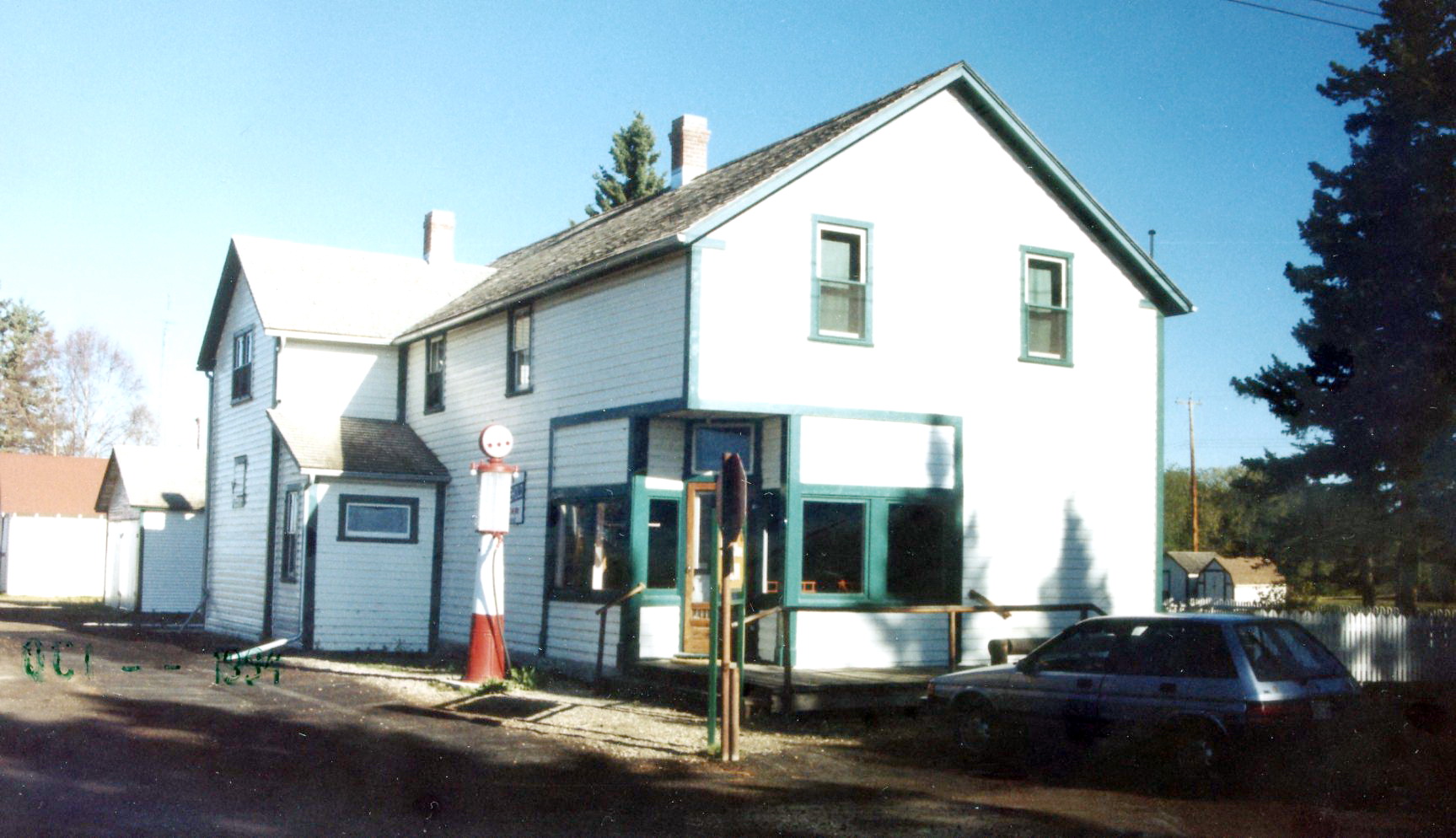
On February 1, 1905, a post office was established inside the home of settler Carl Christiansen. By 1909, Christiansen built the Dickson General Store, complete with living quarters upstairs for his family. Because cash was scarce for many homesteaders, the store famously ran on a barter system, accepting farm produce and lumber in exchange for daily necessities. The store operated as a family business for over 70 years.
By 1909, the hamlet boasted four main structures: a store, a church, a school, and a parsonage. A second wave of Danish immigrants arrived through the 1910s and 1920s, drawn by the thriving community and fertile land. To manage the wet, low-lying terrain, the community established Drainage District #7 in 1917, successfully clearing thousands of acres for agriculture. Unlike many regions that suffered immensely during the Great Depression, Dickson's farmers fared relatively well due to the area's rich soil, reliable rainfall, and proximity to regional operations like the Markerville creamery.
 *
*
General Store 1918