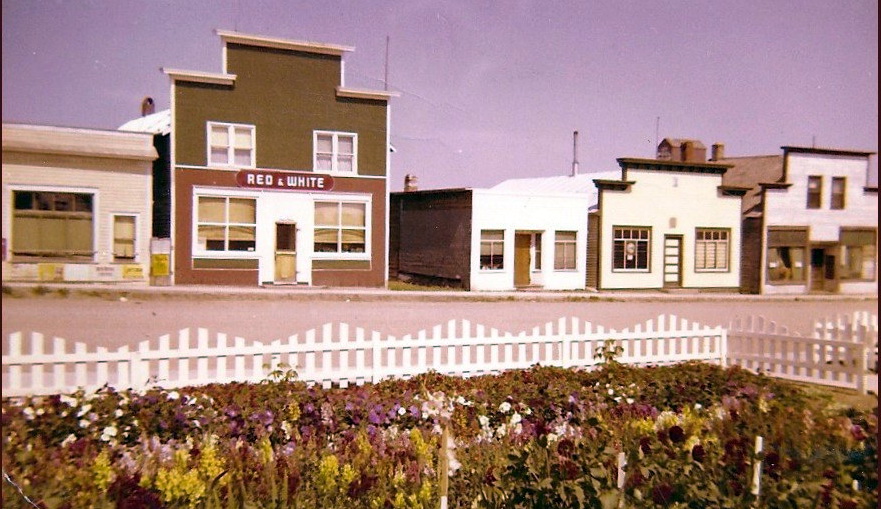
D U N B L A N E
Dunblane, Saskatchewan, originated as a small rural community in the early 20th century, named after the historic town of Dunblane in Scotland by its early settlers.
Informal settlement in the area began around 1910, driven by homesteading opportunities in central Saskatchewan, with Finnish immigrants establishing farms in the surrounding Rock Point district and extending toward Dunblane, Birsay, and nearby locales.
The community's formal establishment is marked by the opening of its post office on May 1, 1914, located initially in a rented dwelling on the SW 1/4 of Section 11, Township 26, Range 7, West of the 3rd Meridian.
John C. Metcalf was appointed as the first postmaster on that date and served until April 22, 1941, providing essential mail services to pioneer families focused on agricultural development.
Early infrastructure included basic amenities such as a general store to support homesteading activities, while the arrival of rail service via the Canadian National Railway's Conquest Subdivision around 1914 enhanced access and spurred initial growth.
The Dunblane Bridge, a combined railway and highway viaduct over the South Saskatchewan River, was opened in 1926, improving regional connectivity.
Dunblane reached its peak prosperity in the mid-20th century, driven by its strategic location along the Canadian National Railway (CNR) Conquest Subdivision, which facilitated the transport of agricultural goods and supported local economic activity.
The town's role in wheat farming and grain handling formed the backbone of its economy, with the railway enabling efficient shipment to broader markets across Saskatchewan.
This infrastructure, including sidings and a water tower for steam locomotives, underscored Dunblane's importance as a rural hub during an era of expanding prairie agriculture.
The construction of the Gardiner Dam, beginning in 1958 as part of the South Saskatchewan River Project, provided a significant regional boost to areas near Dunblane, including enhanced water supply for irrigation and hydropower development that stabilized agricultural production in the semi-arid Palliser Triangle. Local communities benefited from employment opportunities during the project's decade-long build (1958–1967), which cost approximately $120 million and promoted crop diversification and drought mitigation for farmers in the vicinity. By the 1960s, grain elevators operated in Dunblane, such as those managed by Pioneer Grain Co. Ltd. with a combined capacity of around 52,000 bushels, reflecting the town's active involvement in grain storage and distribution.


1955