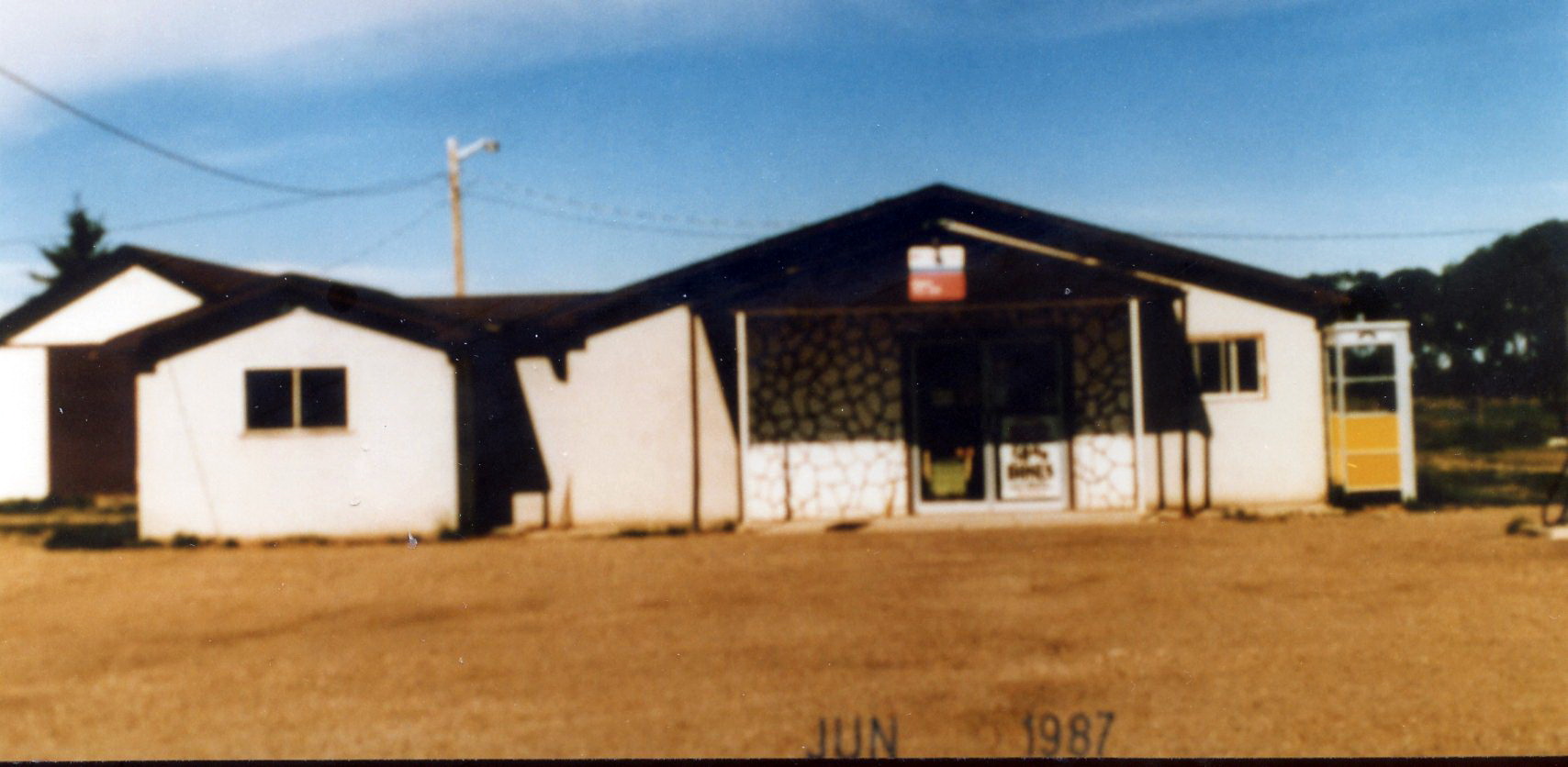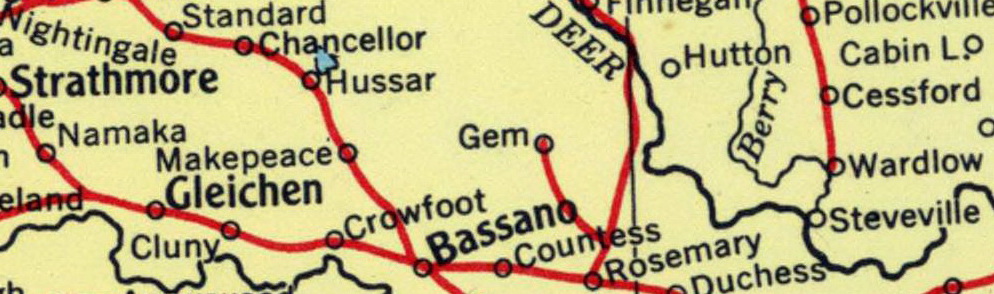
The settlement of Gem, Alberta, emerged in the early 1900s as part of the rapid homesteading expansion across southern Alberta, driven by the Canadian Pacific Railway's development of irrigation districts and the availability of fertile prairie lands for agriculture. Pioneers were attracted to the region following the completion of railway lines that facilitated access and transport, transforming the arid shortgrass prairie into viable farmland through large-scale irrigation projects initiated in the late 19th and early 20th centuries. By 1914, the Gem area had become one of the first to receive water from the Canadian Pacific Railway's irrigation project, which later formed part of the Eastern Irrigation District in 1935, supporting initial farming efforts, and the local post office opened on August 1 of that year in a general store, serving as an early hub for the scattered homesteaders.
One of the earliest community landmarks was the Gem Cemetery, established on a two-acre plot in the early 1900s to provide a resting place for the pioneers shaping the area's development. The cemetery's first known burials took place in 1920, including those of Walter Smith and an infant child of Ed and Mrs. Smith, reflecting the hardships faced by early families in this remote frontier. This site quickly became integral to the nascent community, preserving the legacy of initial settlers amid the influx of homesteaders drawn by government land grants and railway promises.
A significant wave of settlement occurred around 1928 with the arrival of Mennonite families, who took over abandoned farms from prior unsuccessful post-World War I ventures in the Canadian Pacific Railway's irrigation project. These immigrants, primarily from General Conference, Evangelical Mennonite Brethren, and Mennonite Brethren groups in Saskatchewan and Manitoba, brought expertise in dryland farming and established Gem's enduring agricultural foundation; by 1935, about 81 such families had settled across Gem, nearby Countess, and Rosemary. The Mennonite influx prompted the founding of the Gem Mennonite Brethren Church in 1929 with 24 charter members, fostering communal and religious cohesion among the pioneers.
The community of Gem saw significant growth during the 1930s and 1940s, closely linked to advancements in irrigation infrastructure within the Eastern Irrigation District (EID).
Formed in 1935 through provincial legislation that transferred control of the Canadian Pacific Railway's irrigation works to local farmers, the EID enhanced water distribution via expanded canal and ditch systems, boosting agricultural viability and attracting settlers to areas like Gem, where early ditchbanks became central to farming life.
Local histories highlight how these "ditchbanks" facilitated community expansion by enabling reliable crop irrigation on previously arid lands.
The Post office opened on August 1, 1914.