 G L E N F O R D
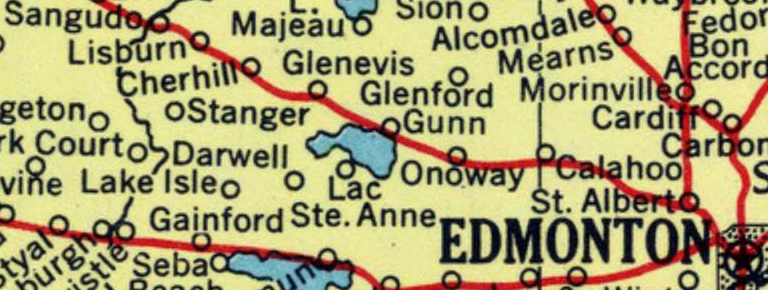
The origins of Glenford traces back to the early 20th-century homesteading boom in central Alberta, where the Dominion Lands Act of 1872 encouraged settlers to claim 160-acre quarter-sections for agricultural development in newly surveyed territories, including those in Lac Ste. Anne County. Following the completion of the Northern Alberta Land Survey in 1899, lands east of Lac Ste. Anne opened for homesteading, prompting a wave of non-Indigenous pioneers to establish farmsteads amid the region's fertile prairies and natural water sources. This expansion was part of Alberta's broader agricultural push, transforming marginal frontier areas into productive farming communities by the 1910s.
European immigrants, particularly from Britain and Ukraine, played a key role in the region's settlement between 1900 and 1920, drawn by government incentives and chain migration patterns that formed ethnic blocs in central Alberta. Ukrainian settlers, arriving in significant numbers after 1891, contributed to mixed-farming economies near Lac Ste. Anne, often filing homestead claims alongside British pioneers who brought experience in grain cultivation. British immigrants, motivated by economic opportunities post the 1903 Klondike Gold Rush decline, focused on livestock and crop diversification in the area's rolling terrain.
Pioneers in the Glenford vicinity targeted natural glens for their initial farmsteads, leveraging sheltered valleys for protection against harsh winters and access to creeks for irrigation and livestock. Documented land claims from provincial archives indicate early arrivals filing homestead applications as early as 1904, with settlers like those in the adjacent Onoway district establishing permanent residences pre-1910 through persistent clearing of bushland and sod-breaking. Historical records from the Onoway and District Historical Society highlight these first homesteaders' roles in communal barn-raisings and trail-blazing, laying the foundation for rural localities like Glenford before formal administrative milestones. Local community histories, such as The Pathfinders, document the pioneer experiences specific to Glenford and surrounding areas. The extension of the Canadian Northern Railway through nearby Onoway in 1909 further spurred settlement by improving transport of goods and settlers to the area.
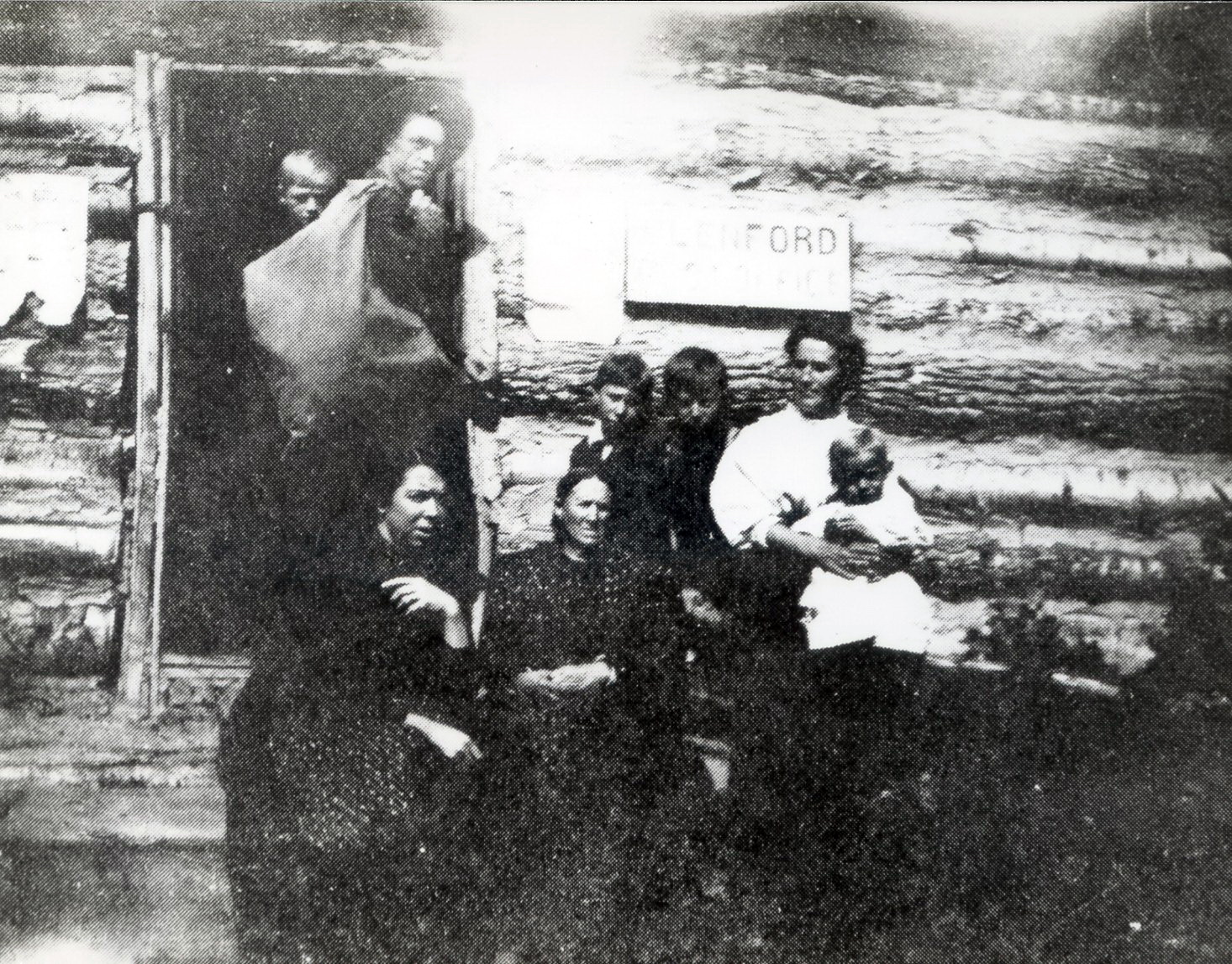
The name Glenford is derived partly from the surname of the first postmaster, Thomas Rutherford, and a nearby glen. The post office in Glenford was officially established on April 1, 1909, serving as the locality's inaugural formal identifier and a critical hub for mail distribution in an era of sparse settlement. Thomas Rutherford, an early settler in the region, was appointed as the inaugural postmaster and played a pivotal role in local administration by managing the office, which operated continuously until its closure on August 31, 1960. This service was essential for connecting isolated farms to broader networks, enabling the exchange of letters, goods, and news vital to rural life in central Alberta. The naming and post office opening are documented in historical records, including the 1928 Place-Names of Alberta by the Geographic Board of Canada. The adoption of the name Glenford occurred concurrently with the post office's creation in 1909, solidifying its use in official correspondence and maps thereafter. Historical spellings show no significant variations, with the name consistently appearing as "Glenford" in provincial records from the outset. Rutherford's tenure as postmaster, spanning the 1910s and into the 1920s, underscored the post office's role in fostering community cohesion amid the challenges of frontier isolation.