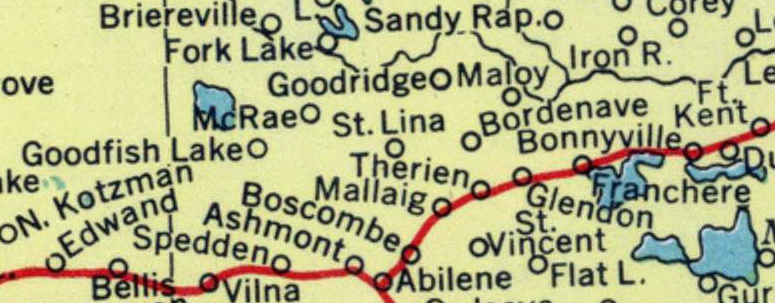
 G O O D R I D G E
European settlement in the Bonnyville area, including Goodridge, began in the early 1900s, influenced by missionary efforts of the Oblate Fathers starting around 1907. Homesteading followed surveys under the Dominion Lands Act of 1872, offering 160-acre quarter-sections to settlers. Prospective farmers were drawn by the fertile soils of northern Alberta, with settlement waves including diverse ethnic groups such as British, Ukrainian, French, and others. Early settlers faced challenges including isolation, harsh winters, and the need to clear land for mixed farming suited to the climate. The extension of railway lines to the region in the 1920s, with service to Bonnyville by 1927, improved access and reduced reliance on trails.
The development of Goodridge in the 20th century was marked by the establishment of key community institutions that supported its growth as a rural farming hub within Alberta's northern prairies.
The name "Goodridge" originated from the local school district, which was formed by homesteaders in the area to provide education for rural children; the Goodridge School was constructed in 1932 to serve this purpose.
Commercial activity began to take shape in the mid-1930s, with the opening of the Goodridge Store and post office in 1934 by Mr. and Mrs. Joe Good, which quickly became a central gathering point for residents handling mail, supplies, and daily interactions.
This establishment helped anchor the community's identity amid the challenges of the Great Depression and early settlement.
The Post office opened on December 31, 1932, and closed on September 11, 1943.
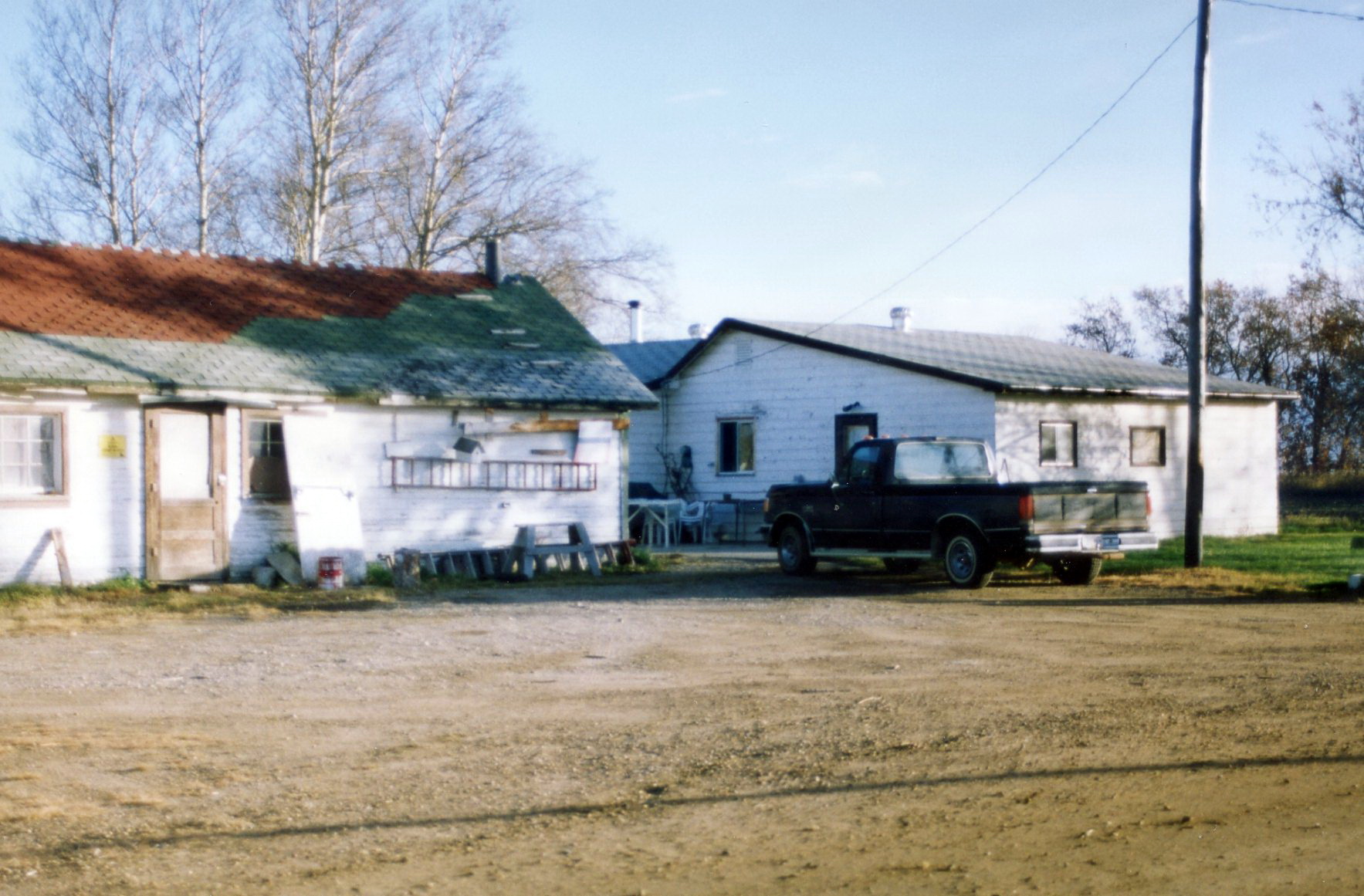
early 1990s