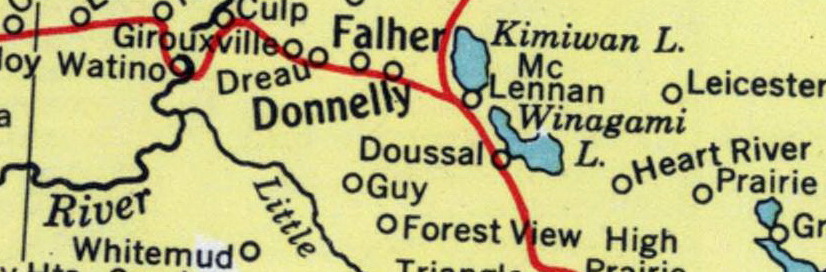
 G U Y
G U Y
Guy, Alberta, was established as a small community in 1931 within the Vicariate of Grouard, serving as a hub for Roman Catholic missionary activities in northern Alberta's Peace River region. The parish of St. Guy was formally founded on 26 June 1931, with L’abbé Jean-François Mallet appointed as its first pastor, reflecting the Oblate missionaries' efforts to expand spiritual and communal support amid growing settlement. This establishment occurred under the leadership of Bishop Joseph-Wilfrid Guy, O.M.I., who had been appointed the second Apostolic Vicar of Grouard on 3 June 1930 and served until 2 June 1937.
The community and its parish were named in honor of Bishop Joseph Guy, a Roman Catholic Oblate missionary born in Montreal in 1883, who dedicated his career to missionary work in western Canada. As Vicar Apostolic of Grouard, Bishop Guy oversaw the development of missions that provided churches, schools, and farms to support both Indigenous peoples and incoming settlers, continuing the Oblates' presence in the region since the 1860s. His tenure aligned with key expansions, such as the blessing of nearby churches in Wanham and Kathleen, underscoring his influence on the area's Catholic infrastructure.
Initial settlement patterns in Guy were heavily influenced by French-Canadian Catholic pioneers drawn to the Peace River region through Oblate missionary initiatives. These pioneers, often guided by French-speaking clergy like those who founded earlier missions at Dunvegan (1866) and Fort Vermilion (1876), established homesteads tied to the church's evangelization and colonization efforts, fostering a francophone Catholic identity in the community from its inception.
Following its naming in 1931 after Bishop Joseph Guy, who influenced early missionary work in the region, the community of Guy experienced initial growth centered around religious infrastructure. The St. Guy Roman Catholic Church was constructed that same year, becoming a pivotal hub for social and spiritual life in the rural settlement. The Peace River region, including areas near Guy, saw continued settlement during the 1930s and 1940s, with French-Canadian Catholics among the diverse groups attracted by the agricultural potential of the Smoky River valley's fertile soils and open lands. This period aligned with broader settlement waves prompted by economic pressures from the Great Depression, leading to mixed farming and homesteading despite challenges like bush clearing and frost risks. The arrival of these families expanded the local population and strengthened cultural ties, with many drawn to the area's promise for wheat, livestock, and forage production.
To support this rural agrarian lifestyle, basic services were established in the early decades, including a post office for communication and mail delivery, and a school to educate the growing number of children.
These institutions, emerging alongside the church, helped foster community cohesion amid the isolation of northern Alberta's pioneer conditions.
By the late 1940s, a local schoolhouse in the nearby Little Smoky area served settlement families, offering essential instruction and social activities.
The Post office opened on August 16, 1937.
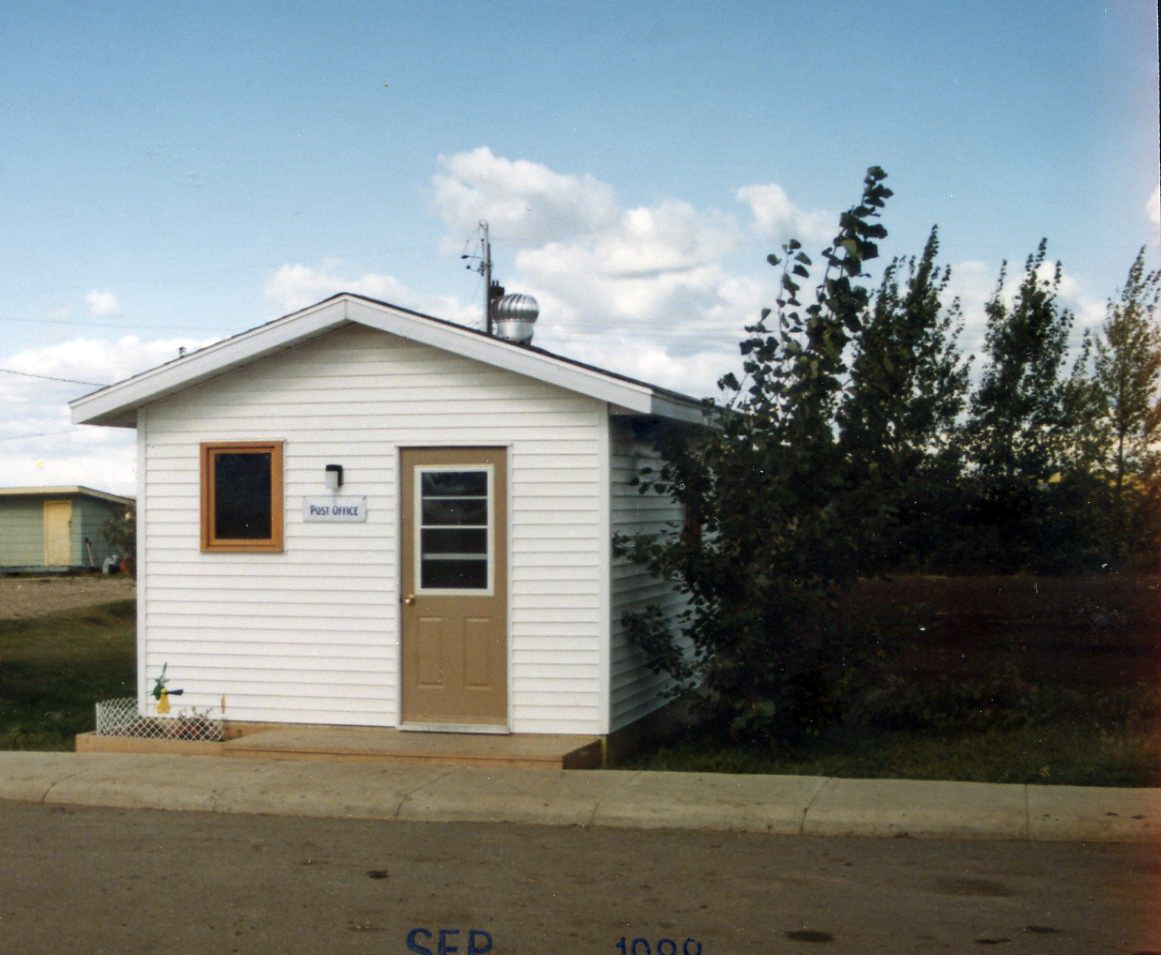
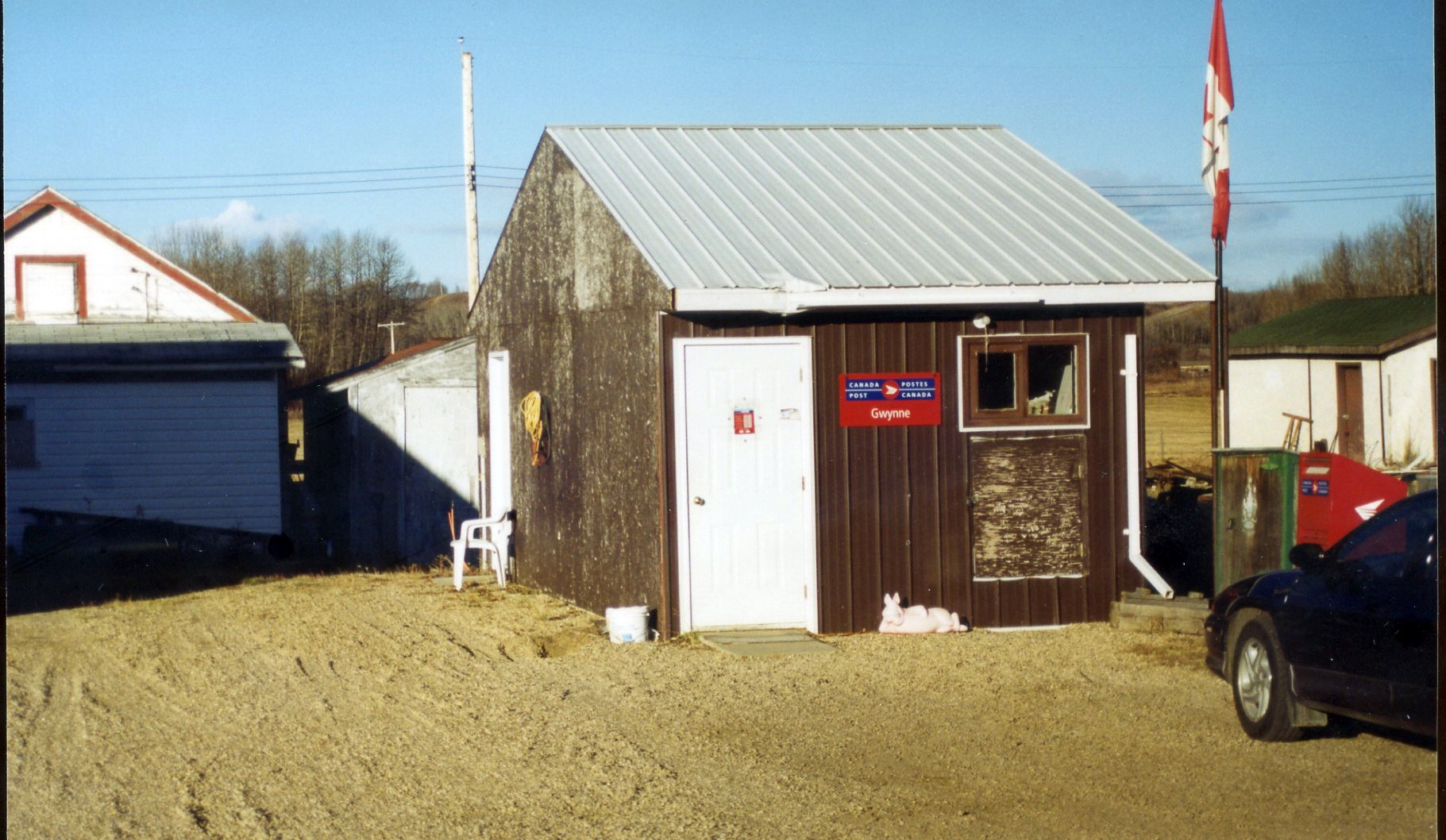
early 1990s