 H E I N S B U R G
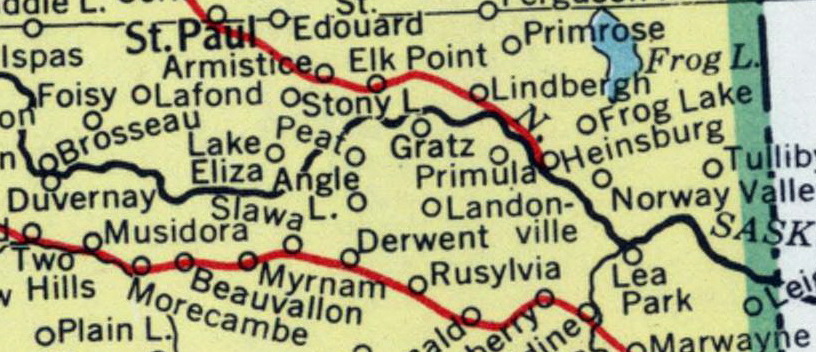
Following the 1908–1909 extension of the Grand Trunk Pacific Railway through Mundare and Marwayne to the south, homesteaders began moving northward across the river toward Frog Lake. A post office and store opened on the upland plains north of the river on November 1, 1913. The community was named after John Heins, an early settler who served as the first postmaster.
A river ferry was established across the North Saskatchewan River to connect farmers on the south bank with services on the north side. In 1928, the Canadian National Railway (CNR) extended its Coronado Subdivision branch line east from Elk Point to Heinsburg. Although a link eastward to Frenchman Butte, Saskatchewan was planned, it was never built—leaving Heinsburg as a permanent end-of-line terminal and turnaround point.
The town site relocated down toward the river valley to meet the tracks, sparking rapid commercial growth. Two grain elevators, a station, and an octagonal wooden steam-locomotive water tower were constructed in 1928. Telephone service arrived in 1929. At its peak between the 1930s and 1950s, the hamlet featured a hotel, church, pool hall, blacksmith/wheelwright shop, general stores (operated for decades by Ben Kates and Rudolph Gregor), and a drugstore briefly run by William Bleasdell Cameron, the sole white male survivor of the 1885 Frog Lake conflict.
Six days a week, mixed passenger and freight trains hauled livestock, grain, and dairy products from surrounding Euro-Canadian, First Nations, and Métis communities toward Edmonton. In the 1940s, Heinsburg School became a centralized school after smaller rural districts closed. In 1950, the CNR replaced the original depot with a standard Fourth Class Depot 4A station, and a new community hall opened in 1958.
A permanent highway bridge opened just west of the hamlet in the 1960s, retiring the river ferry after nearly 50 years of service.
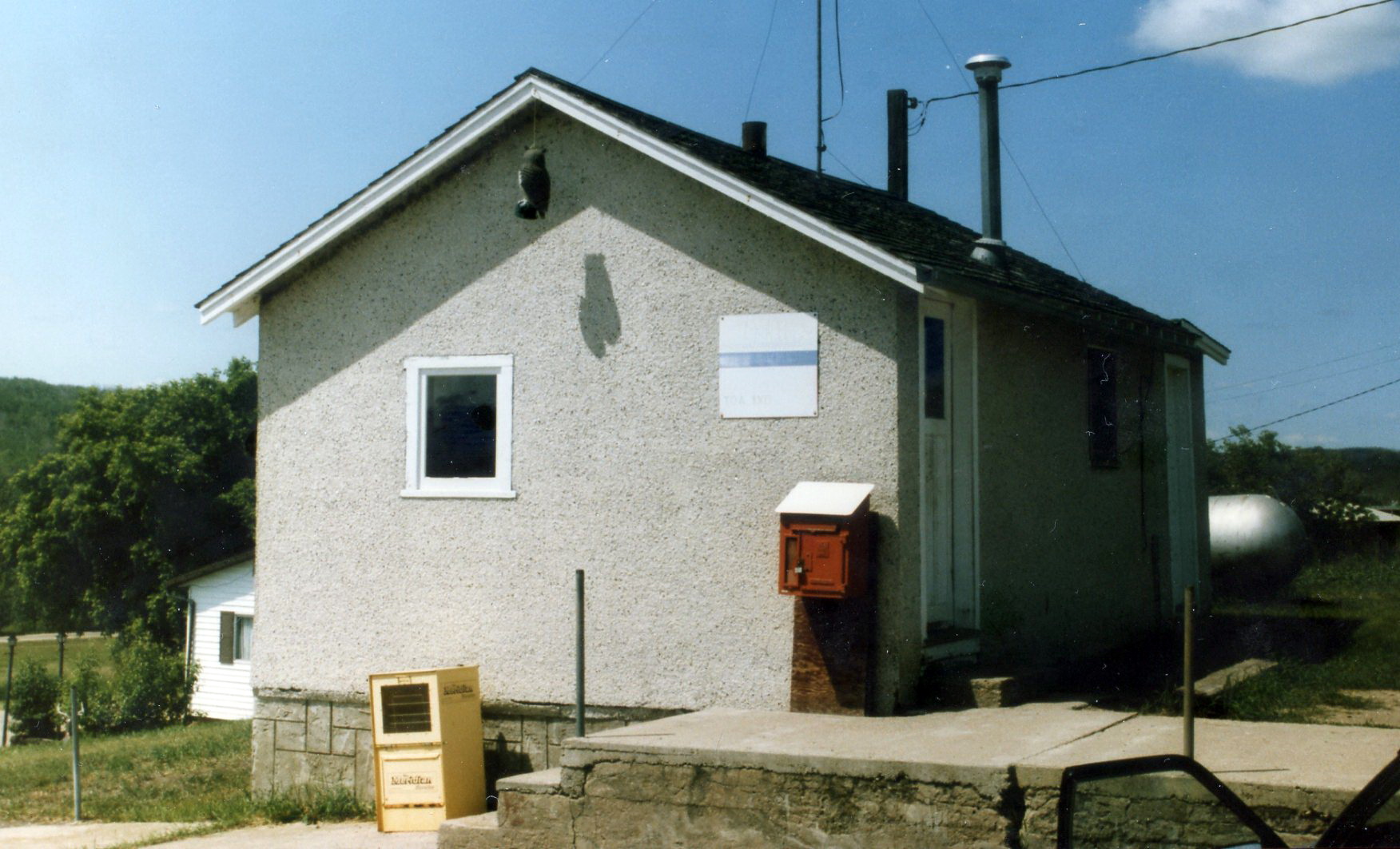
early 1990s