 I S H A M
The settlement of the Snipe Lake district, encompassing Isham, began in earnest around 1905 with the arrival of pioneering ranchers and homesteaders along the Saskatchewan River valley, drawn by federal land surveys initiated in 1886 and the promise of fertile prairie soils for agriculture. Early settlers, including families like the Davises at the Three Bar Ranch and the Larsons, established rudimentary operations focused on cattle ranching, facing acute challenges such as water scarcity—often traveling miles to river sources or digging deep wells—and fuel shortages, with wood hauled from distant riverbanks. A second wave of immigration accelerated after 1910, fueled by American land companies like J.E. Martin Land Co., which promoted homesteads to U.S. farmers via railroad excursions, leading to rapid land claims and breaking of virgin sod using steam-powered plows and oxen teams.
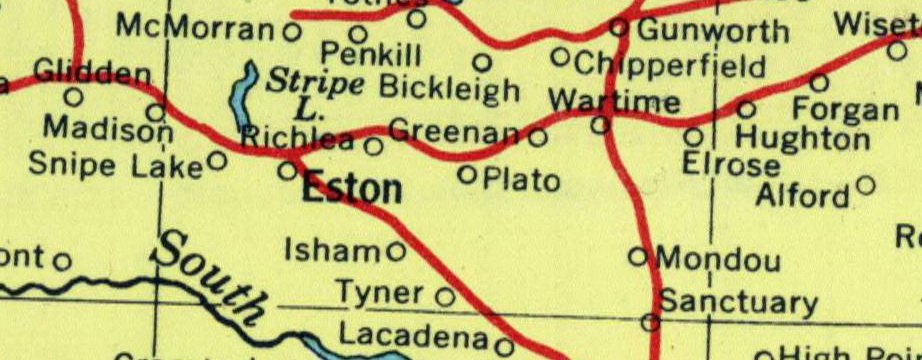
Isham itself emerged as a small rural community along a historic rail line of the Canadian Northern Railway in the early 20th century, serving as a hub for local agriculture within the broader homesteading push in the Rural Municipality of Snipe Lake No. 259, formally organized in 1912 following the creation of Local Improvement District No. 259 in 1910 to address local needs like road building and animal control. The community's development was closely tied to nearby Eston, located approximately 13 km west and 8 km north, which served as a key influx point for settlers after the Canadian Northern Railway arrived there in 1915, facilitating easier access to supplies, mail, and markets compared to the laborious overland treks from Swift Current. At its peak, Isham featured key infrastructure including a church, a one-room schoolhouse, and a general store that supported the agricultural activities of surrounding farms; the store building remains standing as a historical relic. The Post Office opened on November 1, 1927. The first Postmaster was Malcolm McIntyre, who held the position until 1928. Grain elevators, constructed in the mid-1920s across district towns including those near Isham, became central to early economic activity by enabling efficient storage and shipment of wheat harvests, symbolizing the shift from ranching to mixed farming.
Pioneers in the Isham area endured significant hardships, including devastating prairie fires—like the widespread 1906 blaze that destroyed forage and livestock—and profound isolation, with travel limited to horse or oxen teams across rutted trails until rail improvements in the 1910s. The Great Depression exacerbated these struggles in the 1930s, bringing low commodity prices, crop shortfalls, and widespread poverty; local municipal councils provided relief through seed grain, feed, and medical contracts, though many settlers repaid aid via grain liens amid cash shortages. Despite such adversities, the cooperative spirit fostered by shared challenges, including weed control and community threshing crews, laid the foundation for Isham's role as an agricultural outpost in western Saskatchewan's expansion.
Following World War II, the Rural Municipality of Snipe Lake No. 259, which encompasses Isham, experienced a period of stabilization and growth as returning veterans reinvigorated local agriculture and infrastructure projects. Young ex-servicemen contributed to extensive road construction efforts, often working double shifts to improve farm access amid rising mechanization that reduced labor needs on individual farms. This shift from horse-drawn equipment to tractors and combines in the late 1940s and 1950s facilitated larger-scale farming operations, leading to community consolidation as smaller, scattered settlements like Isham adapted to fewer but more efficient agricultural units.
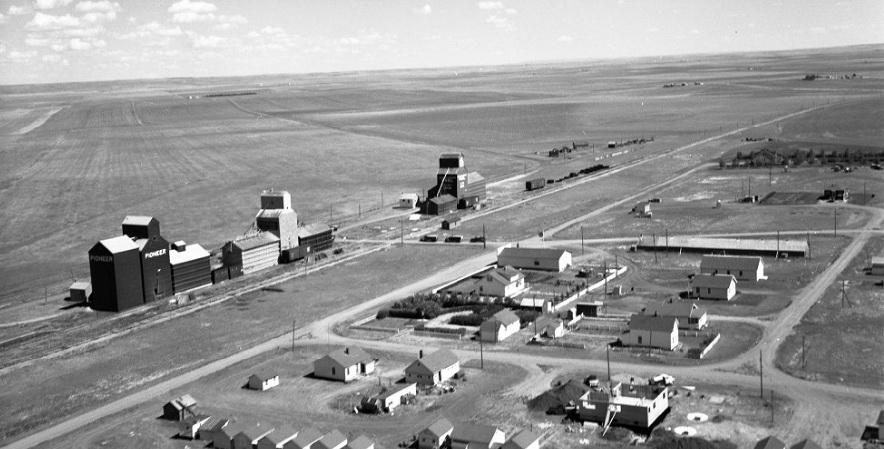
1950s