 J O F F R E
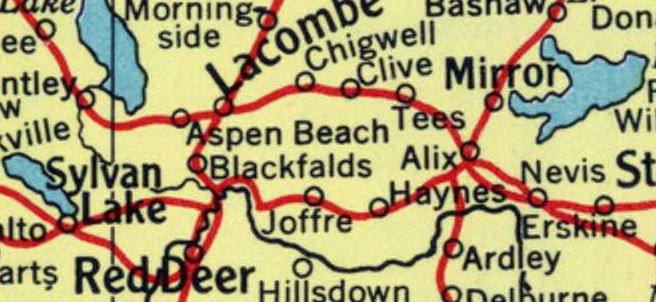
The area encompassing modern Joffre, Alberta, saw initial settlement in the early 20th century as part of the extensive homesteading efforts across central Alberta's parkland region, where the Dominion Lands Act of 1872 encouraged immigrants to claim 160-acre quarter-sections for farming. Pioneers arrived amid a wave of agricultural expansion, drawn by the area's fertile loamy soils and sub-humid climate suitable for mixed farming, including grains like oats and wheat, as well as livestock rearing on natural grasslands and hay meadows. By the 1910s, homestead entries in townships near Red Deer—approximately 19 km west of the site—numbered in the hundreds, with settlers breaking sod using horse-drawn plows and establishing small dairy operations for cream production.
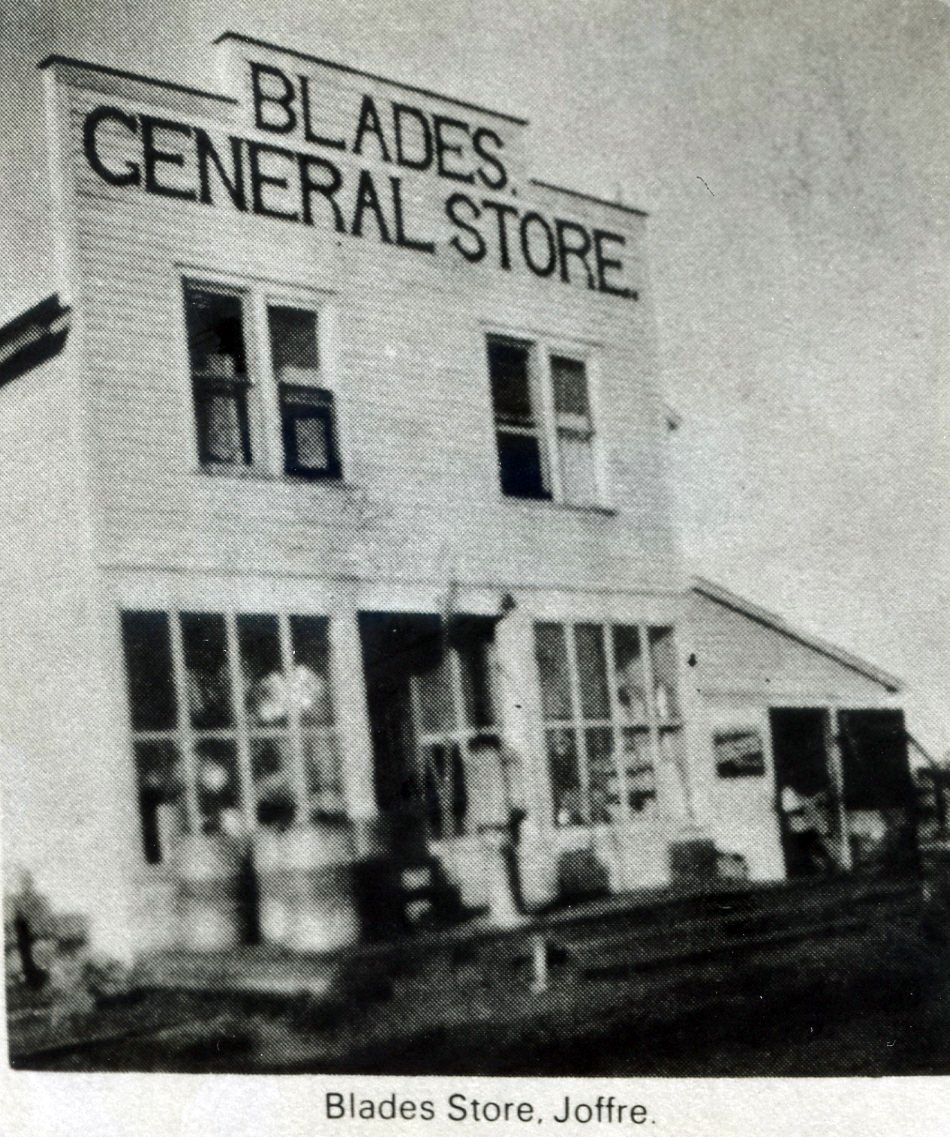
The community's original name, Blades, honored a local pioneer family, specifically R.H. Blades, who became the area's first postmaster when the post office opened on July 1, 1923. This naming reflected the modest beginnings of settlement, where families like the Blades contributed to community infrastructure amid sparse population densities of about one person per homestead in surrounding districts. The expansion of the Canadian Northern Railway, reaching nearby Red Deer in 1891 and extending eastward, played a pivotal role in attracting these early arrivals by improving access to markets and supplies, transforming isolated homesteads into viable agricultural outposts.
Agriculture dominated as the initial economic driver, with pioneers focusing on subsistence and commercial crops; for instance, exceptional yields of over 90 bushels of oats per acre were reported in the region during favorable wet years like 1900–1903. Railway connections enabled the transport of produce to urban centers, fostering gradual growth before formal organization. The settlement's transition began with its renaming to Joffre on Apr 1, 1934. The name Joffre was adopted honoring Marshal Joseph Jacques Césaire Joffre (1852–1931), who served as Commander-in-Chief of the French forces during World War I from 1914 to 1916. This renaming reflected the era's admiration for military figures amid the global conflict.