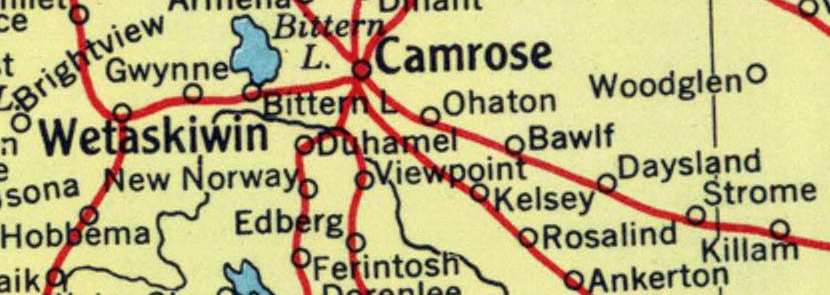
 K E L S E Y
The settlement of Kelsey, Alberta, began in 1902 when homesteaders were drawn to the fertile agricultural lands of Camrose County in central Alberta. Among the earliest arrivals was the family of Moses Kelsey, who relocated from Milbank, South Dakota, along with their son Earl, claiming land that would form the core of the future community. These pioneers took advantage of the Dominion Lands Act of 1872, which offered 160-acre homesteads to settlers willing to cultivate and reside on the land for a minimum period, spurring immigration to the prairies. The Kelsey family's claim exemplified the broader wave of American and European immigrants seeking opportunity in Alberta's rich soil for grain and mixed farming.
The community's name derives from this founding family, proposed by another early settler, Milton Zimmerman, who arrived in the same year. Initial growth was slow but steady, driven primarily by agricultural pursuits, as families established farms focused on wheat, oats, and livestock amid the region's black soil and moderate climate. By the mid-1910s, a handful of households had formed the nucleus of Kelsey, with land claims continuing under the Dominion Lands Act to support expanding cultivation.
Key infrastructure developments accelerated settlement in the early 20th century. In 1915, the Canadian Northern Railway extended a branch line southeast from Camrose through the Kelsey area, providing essential transport for grain and supplies, and noted for its long straight stretch of railway. This connection, often associated with the Battle River Railway route, facilitated further immigration and trade, enabling the community's first grain elevator to be built in 1916 and a railway station shortly thereafter. These advancements solidified Kelsey's role as an agricultural outpost, with population incrementally rising through family-based farming operations by the 1920s.
Kelsey's development accelerated in the early 20th century following its initial settlement in 1902, with significant growth tied to the arrival of the Canadian Northern Railway in 1915. The railway line, extending southeast from Camrose, established a station in Kelsey by 1916, which facilitated the community's expansion as a key stop along what is noted for its long straight stretch of railway. This infrastructure spurred the construction of two general stores, a church, and a dance hall, transforming Kelsey into a bustling rural hub supporting local trade and social activities.
During the World War I and II eras, Kelsey played a vital role in regional agriculture, particularly as a grain-producing center where four elevators were built to handle the area's wheat and other crops. The community's strategic location along the rail line enabled efficient transport of produce to markets, contributing to Alberta's wartime agricultural efforts, while local events such as church gatherings and a popular dinner theatre in the 1940s fostered social cohesion amid economic demands. Infrastructure expansions, including telephone service in 1920 and electricity in 1951, further supported farming operations and daily life, underscoring Kelsey's importance in the broader rural economy.
Post-1950s, Kelsey experienced stagnation and decline characteristic of many rural Alberta communities, driven by broader depopulation trends and reduced rail usage as mechanized farming and highway improvements diminished the need for small sidings.
Commercial facilities gradually closed, including the general stores, church, and dance hall by the late 20th century, leaving the community with limited amenities beyond a post office and a community hall.
The Battle River rail line faced abandonment threats from Canadian National in 2003 due to low traffic, but local farmers formed a cooperative to purchase and revive it in 2009, preserving it for grain loading and excursions while mitigating further economic isolation.
The Post office opened on December 1, 1917.
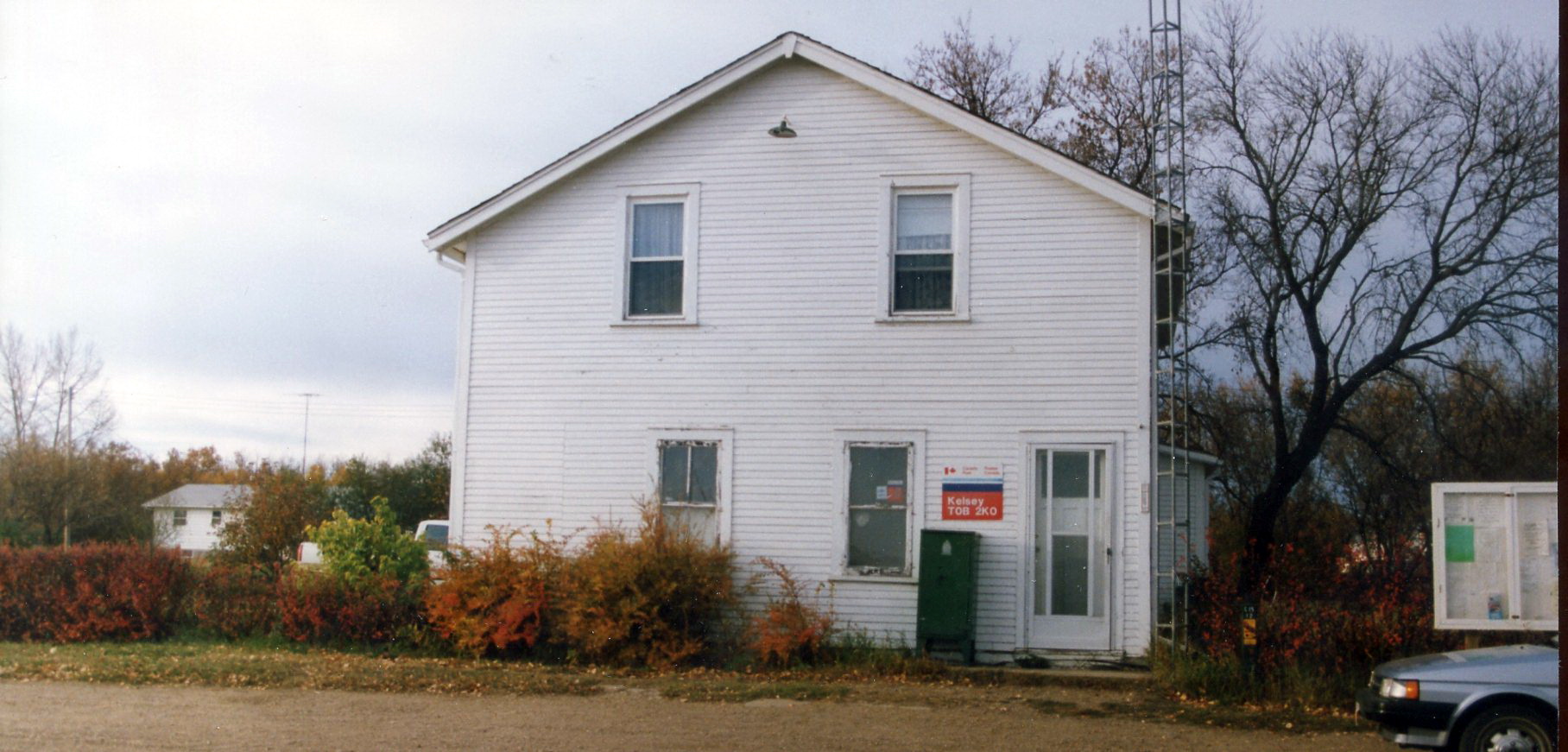
early 1990s