 W A R D L O W
Wardlow, located in the prairie region of southern Alberta, emerged as a settlement in the early 1910s through homesteading encouraged by the Dominion Lands Act of 1872, which offered 160-acre quarter-sections of land to settlers for a nominal fee upon fulfilling residency and cultivation requirements. The area's fertile soils and potential for dryland farming attracted pioneers to the Rainy Hills district north of the Red Deer River, with the greatest influx of homesteaders occurring between 1909 and 1916, prior to significant rail infrastructure. Initial land claims focused on sections suitable for grain production, marking the transition from ranching dominance to agricultural settlement in this semi-arid zone.
The founding of Wardlow is tied to the arrival of early pioneer families in 1910, who established the core of the community through adjacent land purchases under the homesteading system. Four key families—those of J. Cravath, Ed Bell, Walter Kin, and Milo Cravath—each acquired a full section of land (640 acres) with corners meeting at a central point, forming the basis of the settlement known as Cravath Corners, which encompassed the broader Wardlow district. These settlers, primarily from established farming backgrounds, built basic structures including frame houses and outbuildings, supplemented by temporary sod constructions common to prairie homesteads for their availability of materials and insulation against extreme temperatures. By 1919, the community had coalesced around shared agricultural pursuits, with families collaborating on breaking land and establishing mutual support networks amid sparse population densities. However, early abandonments began around 1920 due to droughts and low rainfall, with major waves in 1919–1921 and 1930–1931 leading to significant depopulation and farm relocations in the Rainy Hills area.
Community formation solidified with the establishment of essential services, including the Cravath Corners post office initiated by J. Cravath in the mid-1910s to serve Wardlow, Steveville, and surrounding districts. This rural post office, operating from a pioneer's home, facilitated communication and mail delivery, symbolizing the area's growth toward self-sufficiency by 1919, when basic institutions like informal schools and communal halls began to emerge. The post office remained a hub until its closure in 1926, reflecting the organic development driven by homesteader initiative rather than external infrastructure.
Early settlers faced significant challenges, including profound isolation due to the lack of roads and reliance on horse-drawn wagons for transport over vast distances to markets in Brooks or Medicine Hat. Harsh prairie weather exacerbated difficulties, with limited annual rainfall of around 12-15 inches leading to frequent droughts that threatened crop viability and prompted initial waves of abandonment. Specific hardships included accidental deaths, such as the 1916 suffocation of young homesteader David Thomas Jones in his shack and the drowning of Peter Thompson in Berry Creek, underscoring the perils of rudimentary living conditions. The 1918-1919 influenza epidemic further decimated the small population, claiming lives like those of George Nelson Parker and Jesse Calvin Parker, brothers who died days apart while supporting young families. Despite these adversities, resilient pioneers like the Cravaths persisted, laying the groundwork for Wardlow's pre-railroad agricultural foundation.
The extension of the Canadian Northern Railway's Peavine line southward from Hanna to Wardlow in 1920 established the hamlet as an important siding and stop for freight and passenger services along the route to the Red Deer River. Construction on the line had begun in 1915 but was delayed by the First World War, drought, and economic depression, limiting progress until resumption allowed completion to Wardlow as the temporary endpoint. This infrastructure connected previously isolated farmlands to broader markets, facilitating the transport of grain and other agricultural goods from the surrounding region.
The railway led to the initial establishment of Wardlow and nearby communities in the early 1920s, serving as a hub for grain loading and passenger travel as it opened southern Alberta's "south country" for settlement. However, ongoing droughts and the economic impacts of the Great Depression contributed to population declines and farm abandonments throughout the decade, limiting long-term growth.
Post-World War II, increased reliance on highways eroded the Peavine line's viability for rural freight and passenger services, leading to its gradual decline. The Hanna-Wardlow branch was fully abandoned in the 1970s, marking the end of active rail operations in the area.
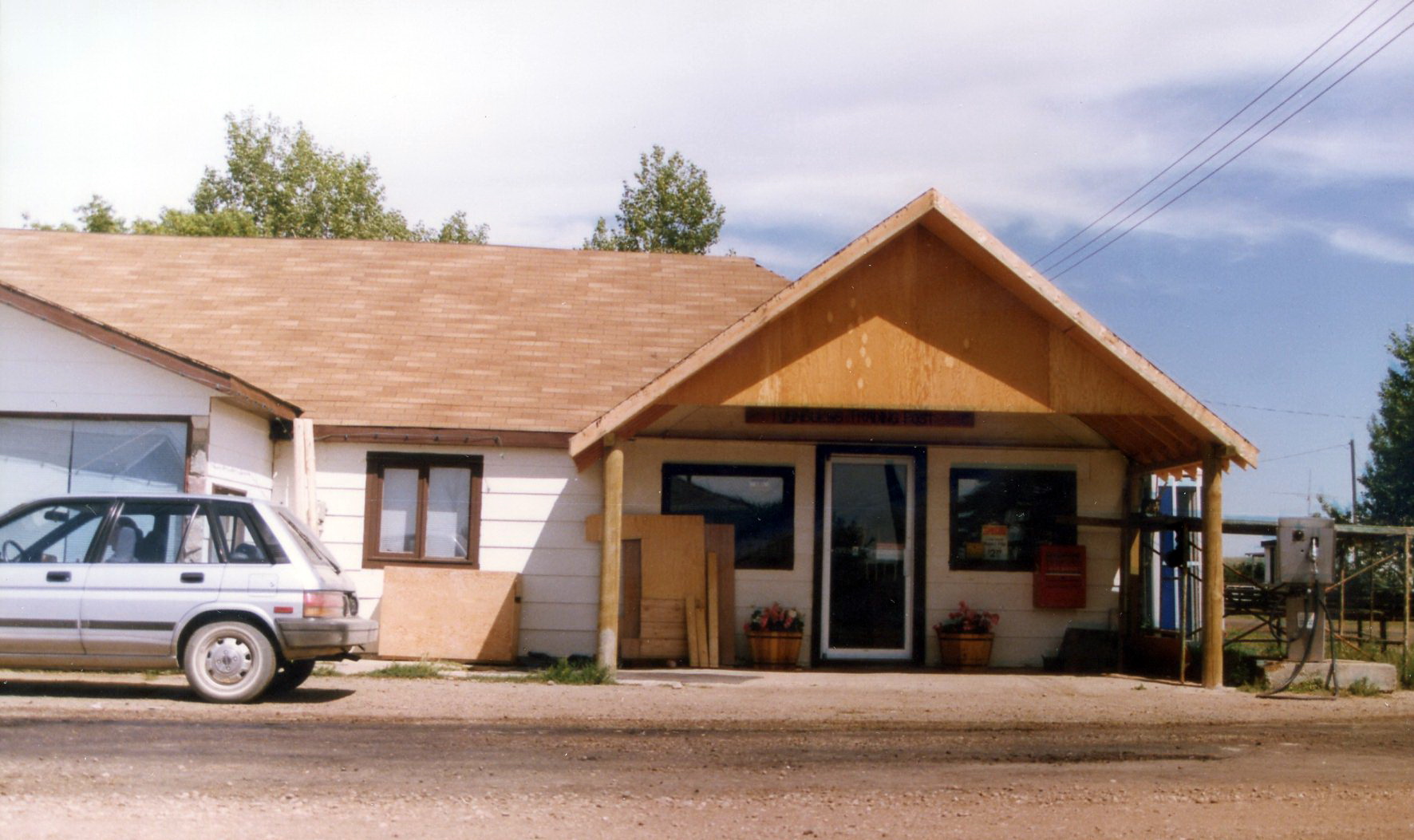
early 1990s